The Art of Undoing

The Art of Undoing

Is Hustle the only way you work toward goals?

Are you a good starter but not so great on finishing?

Have you been told you do things the hard way?

Spring brought new beginnings and many of us are deep in implementation of changes we wanted to make this year.  Fresh starts are bumpy though, making it easy to give up and turn back.  A problem I’ve noticed is the assumption that our wins should come the hard way in order to “count”.  We’ve all heard, work smarter, not harder, but I think we love the scrappy, ‘overcoming all the odds’, underdog tale of victory – projecting that on to our own journeys.

I’m here to tell you, there is no extra medal for doing things the hard way!  It is not shady or lazy to make things easier on yourself.  There are no life hack police coming to ticket you.

Now that we have that straight, be sure you are subscribed to our newsletter, as this month’s freebie is a worksheet of strategies from Atomic Habits that may make your change process easier.  In the meantime, let’s discuss a foundational strategy for easing the process of change: slowing down.

Wait a minute…I just got going and you want me to slow down?!  Yes.  Taking off at top speed is a great way to burn out before you can truly establish the new habits, skills and mindset you’re trying to build.  Make things easy on yourself by slowing down the speed of the changes you’re making.  Give each step of change more time for you to acclimate.  For example, if you want to improve your sleep routine, go to bed just one hour earlier each week instead of setting a date and expecting yourself to stick to your goal bedtime right off the bat.  Slowing down the pace of your life overall improves your ability to make wise decisions, reduces stress, increases your self awareness, improves learning of new skills, strengthens connections, increases creativity and reduces burnout.  Just like marathon runners, we must pace ourselves if we are to finish the race well.

So if you’ve been struggling to implement steps toward your goals…slow down.  Consider these strategies if you need practical ideas on what that means for you:

  • Develop a default answer when anyone wants you to make a decision – I’ll let you know tomorrow.  This gives you 24 hours to consider your options.  Be sure to honor your word and communicate your decision the next day.
  • Notice when you are rushing and get curious.  No judgment; just analyze what is driving the hurry and consider how you can shift that pace.
  • Schedule a few minutes each day or an hour a week for quiet reflection.  This will give you an ongoing understanding of your emotions, needs and desires which will enable you to shift your strategies regularly to be more effective.
  • Practice mindfulness – paying careful attention to what is happening in the moment.  Describe to yourself what you are hearing, seeing, smelling, tasting, and touching – right here….right now.  This trains your brain to slow down and think more critically and effectively.
  • Regularly remove (or turn off) all digital devices from your surroundings when spending time with your core people. You’ll be surprised at what you notice and how much easier it is to implement any changes you are making in your relational style.
  • When practicing a new skill, purposely move slowly so that you can build muscle memory and make less mistakes.  Quick wins feel great but more often, we experience frustrating fails when we go too fast, making it more likely we will give up.
  • Set aside time to be bored.  This is when creativity and innovation arises because there is finally space to generate ideas.
  • No matter how much you’re trying to get done, prioritize regular rest.  This is the only way to ensure that your efforts remain sustainable.

Long term gains are greatly reduced when we hurry.  If you want to make your journey lighter and easier – slow down!


Reality-Based Planning

Do you find that your plans usually don’t work?

Do you end up “winging it” after a while – with mixed results?

Has life convinced you that planning is pointless?

Realistic expectations.  A key to mental, emotional, physical health and…planning.  Is that a surprising claim?  Think about it; at the root of every disappointment, heartache and failure you’ve experienced is an expectation that was not fulfilled.  Sometimes, that is unavoidable when we are blindsided by the unforeseen, but many times the disappointment, heartache or failure could have been avoided if we started with a more realistic expectation.

First we reflect and dream.  If you’ve ever been exposed to a ‘funnel approach‘, you understand the creative benefit of casting a wide net.  When we begin with reflection on what has been, we can gain an honest assessment of what worked well, what did not and what our heart’s desires are.  From there, we set goals.  If we take the time to align our goals with our standards and boundaries, we are setting a target that is true to who we are.  Next comes planning and this is where things can fall apart if we do not take the time to examine our expectations.  Let’s look at common pitfalls:

  • Life is dynamic – Many of us plan as if life is linear or static.  We set a goal, list out the objectives and begin the process with the expectation that if we simply follow the steps, we will move directly toward our goals.  You probably chuckled out loud when you read that, as most of us realize this is not how life works but if we are honest, we often plan as if it does.  We expect that the conditions present at the start of our process will remain static as we move forward so that we can concentrate on what we are trying to achieve.  We all know this is far from true – change is inevitable but when you are planning out the procedures for reaching a goal, do you take the time to consider: What changes will affect my process? What shifts are already happening around me?  What supports or factors am I counting on that may disappear?  What blessings may come my way that would make this goal obsolete?  When we plan as if life is ever changing, we will not struggle as much when the reality of that unfolds.
  • Life is not a destination – I love a solid sense of “arrival”!  It feels so good to work hard for something and then finally attain it.  The problem is that we can wrap our sense of worth, stability and/or well being into a particular goal and that is always a setup for disaster.  Many of you reading this have learned the hard way that achieving that goal you set did not give you the sense of value, security or health you thought it would.  At least not long-term.  Instead of basking in your arrival, there is this creeping sense that there must be more.  Growth is lifelong, there is no point where we can sit back and believe we are finished.  Well, that sounds horrible…Who wants to live on an endless hamster wheel of striving?  That is definitely not the alternative!  Instead, let me trot out the trope of “life is a journey”.  Yes, we’ve seen it on a thousand cards, posters, mugs and t-shirts because, it’s true!  We must root our sense of worth, stability and well being in something higher than goals we achieve.  Psychology calls that a secure base.  Once that is established, our goals become opportunities for growth, not the thing that defines us.  When our goals do not define us, we can approach the journey with balance and less tension.  Detours happen on the journey and we have our secure base to slow us down, ground us, and help us find the path we need to be on.  As you plan your steps toward a goal, ask yourself what you are expecting achievement to accomplish for you.  You’ll catch the unrealistic expectations for value and security that set you up for burnout and disappointment.
  • Rest is not optionalI’ll sleep when I’m dead:  We’re all familiar with hustle culture; the concept that good things come only to those who maintain the grind.  Perpetual productivity becomes the ‘holy grail’ with down time or self care dismissed as hindrances to success.  Capitalism requires continuous expansion and individualistic cultures offer little investment in a collective safety net, so for many of us some form of hustle feels necessary.  Realistic expectations demand that we respect the systems in which we operate so I must acknowledge this reality, especially in the USA.  However, while there may be little to no societal support for sleep and the art of doing nothing, our bodies need what they need.  This presents a dilemma that must be wrestled with in planning: What is the bare minimum pace I must maintain in order to meet my survival needs?  Are there other activities I can forgo in favor of the rest my body needs? (Note that rest is defined as sleep and quiet time for reflection.) What is at stake if I do not get enough rest?  What consequences have I noticed in the past?  Do my goals allow me to incorporate rest along the way and how do I make sure that rest happens?  Adjusting our expectations for rest allows us to avoid the inevitable mental, emotional and/or physical crash that comes when we let society dictate our expectations for constant effort.
  • Life happens in cycles – Similar to the linear expectation that gets us in trouble, many of us plan with absolutely no attention to the cycles operating in and around us.  A quick glance at nature shows that everything operates in patterns of progress, rest, regression and renewal.  Yet we plan and operate as if we are exempt!  How would our planning change if we took into account the cycles at play from the reproductive cycle we women face to economic cycles, work cycles, individual mood cycles for those around us, to empire cycles, etc.  What cycles internally and externally affect your life?  Where are you in each of those cycles?  How do the various stages of each cycle affect your progress toward a goal?  Understanding the ebb and flow of cycles helps us build flexibility into our expectations and our planning.   The idea of seasons is another way to look at cycles and you can find a deeper dive on that here.

So, if you’ve reflected on your heart’s desires and set SMART goals, it’s time to identify the knowledge you’ll need to gain, the skills you’ll need to master and the day to day habits and practices you’ll need to cultivate in order to reach those goals.  Those are the specific components of planning.  Once you have them, come back to this post and review the expectation pitfalls against the objectives you’ve identified.

May I encourage you to complete a time budget: tallying the amount of time regular life tasks as well as self care and goal-directed tasks take.  Remember to include the time it takes to prepare for a task or commute to where you need to be.  Add in a 10% margin (that’s 17 hours) and see if everything fits into the 168 hours we all have each week.  Talk about working with realistic expectations!  Adjust your planning accordingly and you will have a much more effective road map for reaching your goal.

Your final step is to sit with your planner/life organization system, whether analog or digital and record your deadlines and reminders each day, week or month.  Block the times in your calendar that you will need to do the things that are priority for you.  Life comes at us fast so we must protect our time against the things that will very easily consume it.


Knowing what you want

Are you an enthusiastic goal setter but consistently find yourself losing track?

Did you forgo new year resolutions because they “never work”?

Do you feel obligated to set goals but have no energy to get into it?

Tune in for #realtalk on boosting your effectiveness when it comes to setting goals.  We are coming off a month of reflection as we assessed our wins and growth areas from last year.  Now, it is time to set goals, considering what we want for ourselves.  I can almost hear the audible groan from some of you: Look around Andrea, the world is a dumpster fire right now and you want me to set goals?  I get it…and still, hear me out 🙂

Goals don’t always have to be bigger and more.  Goals can actually be about doing less and focusing tighter.  You still with me?  Let’s dig in.  One of the biggest mistakes I see when it comes to goals is making them based on external expectations and comparisons to others versus our own deeply held values.  That’s why reflection is so important…reflection is an important tool for knowing self – what works for you, what does not and what truly matters to you.  Taking a look within gives you the important foundation for deciding what you want for your future.  What we’re not going to do here, is run after what the rest of society is chasing.  Instead, let’s take a look at your personal values.

Values are intangible concepts that show up in our day to day as standards and boundaries.  For many years, I have taught clients that if a boundary depends on someone else’s compliance, that is not a boundary.  Then, I came across material from Dr Raquel Martin on standards, boundaries, expectations and rules which beautifully crystalized what I’ve been teaching so I will borrow her constructs here.  We cannot set realistic goals if we do not know ourselves well so standards and boundaries matter in this conversation.

As Dr Martin explains it, standards describe what we allow and what we do not allow in our lives.  For example: I surround myself with friends who reciprocate honest and graceful communication.  Another example is that I do not keep people in my inner circle who play manipulative games in relationships.  If those are a person’s standards, it would not make sense for them to set a goal of getting involved in an organization that is known to have a toxic culture.  She also describes boundaries as what we are committed to doing or not doing.  Examples include: I am committed to reserving one day a week for restful, restorative activities, or I am committed to not engaging a restrictive, toxic relationship with food.  Setting goals that will consume every free moment of my weeks or involves restrictive dieting would violate those boundaries.  Are you seeing the connection?

For the sake of clarity, expectations and rules are the hopes and desires we have for what other people will do.  Many of us make the mistake of considering our expectations to be our boundaries.  For instance, I may say that my boundary is that you cannot yell at me when we are in conflict.  Remember when I shared my teaching point of, “if a boundary requires someone else’s compliance, that is not a boundary”?  That is an expectation.  My expectation is that if we are in conflict, you will not resort to yelling.  My boundary is that I am committed to exiting the conversation immediately if there is any yelling.  Do you see the difference?  An expectation communicates what I hope another will do and I have no control over that.  A boundary communicates what I will and will not do and I have primary control over that.  A rule is a mutually agreed upon principle that has consequences for violation.  If both parties did not agree to the rule and if there is no independent consequence when one person violates the rule, then the whole thing is a waste of time.  How many times have we set rules in our relationship that went absolutely nowhere?  These differences are vitally important in managing our mental health and critically important in our goal setting as well.  How many times have you set a goal for yourself that rested (at least in part) on the hopes and desires you had for someone else’s participation or support?

So, where do we go from here?  Let’s break it down:

  • Start with your values.  Here is an excellent assessment that can clarify what matters most to you – https://personalvalu.es/  Feel free to use it as a jumping off point.  It does not have to be the final answer but instead can be the inspiration for identifying the top 3-5 things that matter most to you in life.
  • Based on your values, create a set of standard statements.  Write down specifically, what you want to allow or prioritize in your life and what you will not allow in your life.  Instead of saying, “I prioritize peace and harmony in my life” – ask yourself: What creates peace in my life?  What does harmony look like to me?  That line of questioning would lead to a more specific standard statement like, “I prioritize a consistent practice of solitude and quiet in my life”, or “I surround myself with people who are committed to repairing relational ruptures when they happen”.  Aim for four specific standard statements.
  • Next, ask yourself what you have to do or not do in order to maintain those standards. Those are your boundaries.  Where do you have power in what you will and will not do?  Again, be specific.  Instead of saying, “My boundary is I protect my peace”, you would say, “I set aside one day a week for a time of sabbath rest and outside of a life or mental health emergency, I do not schedule anything else on that day”.  Or, “I will not engage vulnerable conversations or activities with someone who has not repaired a rupture”.  Aim for four specific boundary statements.
  • Once you have your standard and boundary statements, think about what you want for yourself this year.  That is the time frame we’re focusing on right now.  What are your hopes and desires for community, emotional health, physical health or career?  Brainstorm ideas and jot those down.
  • Now choose one desire or hope and consider a goal you could set to help you actualize that desire.  How would you need to change in order for that hope to come to fruition?  Maybe I realize I do need to develop a regular practice of solitude and quiet or maybe I need to cultivate a new friendship that will be healthier than what I’ve had in the past.  Remember, goals can be about doing less and focusing more.  You may want to play around with a couple of your desires in order to finalize which one lends itself best to a goal for the year.
  • Once you have a goal statement – check it against your boundaries and standards.  Does that goal align well with them or would it require you to compromise a standard or boundary?  This alignment check will save you a world of frustration.
  • Now, back to being specific.  It’s not enough to say, “my goal this year is to have more quiet time”.  I need to get specific: “My goal this year is to have one day a week with nothing scheduled so that I can pursue restful, restorative activities”.  Making things measurable helps a lot with specificity.  Notice the difference between “more quiet time” versus “one day a week”.  Make sure your goal has a specific measure – a trackable number.
  • Is your goal attainable?  Maybe I have a specific goal of building an inner circle of three close friends this year.  Could I build a whole new community of friends in a year?  Probably not.  This goal requires the participation of others so we have to be very cautious.  There’s nothing wrong with this goal on paper but because it has that tenuous component of involving others, we may need to focus in even more specifically.  Number of friends is trackable but not within our complete control.  So I might clarify my goal to be: I will participate in 26 connection-building activities with potential friends this year.  The difference is, I have greater control over how many times I “put myself out there” and far less control over whether or not the people I meet have the qualifications for healthy friendship or choose to engage friendship with me.
  • Circle back to your standards and boundaries to make sure you’re still in alignment.
  • Now, ask yourself – what obstacles will I face in pursuing this goal?  How will I overcome those?  This is your reality check.  You walk a fine line here between recognizing that change is always challenging AND there are systems and factors in place that you cannot control.  Maybe you’re a single mother of 2 without a strong community of support and you literally cannot remember the last time you had a day to yourself.   This is the step where you adjust your goal from a weekly day of quiet to a monthly or even quarterly day of quiet.  Maybe, as you consider what you would have to overcome to reach your goal, you realize that there is a specific obstacle that should be your focus instead of the original goal.  For example, I want to pursue healthier friendships and I set the goal of 26 connection-building activities but as I consider the obstacles, I realize that my job sucks every bit of life and energy out of me and I rarely have the energy to think of creative connection, to show up to events where I could meet people, or plan/choose said connection-building activities.  This is the point where I realize my goal needs to be directed at fixing my job situation first.  If that is not realistic at this point, perhaps I change my goal to a focus on recovery from work with a commitment for one small step I can take this year toward a long-term job change.
  • Remember to check in with your standards and boundaries to make sure that your final goal is in alignment.

Notice we haven’t made a plan yet.  Just this process of self awareness and goal setting is more than enough and requires time and attention if it is to be effective.  For now, place your standard and boundary statements somewhere you will see them regularly and set a reminder in your calendar for a regular interval (weekly, monthly?) where you will honestly examine your daily choices to see if you are living in alignment with your standards and boundaries.

Stay tuned next month, we will look at planning from a realistic perspective so take the time now to examine within and to decide what you truly want for yourself!


Seasons

Have you ever considered viewing your life through the lens of seasons?

How would that change your planning, your rhythms, your expectations?

The entire globe functions off the concept of seasons.  Even those living in tropical or icy climates still function around the idea of seasons as agriculture, tourism, and daylight change with seasonal predictability.  Living in Florida, we experience seasons according to the upper limit of the thermometer – ‘the bad place’ levels in summer to gloriously brisk in the ‘winter’.  We also recognize seasons as our traffic shifts to accommodate snowbirds and tourists.  Seasons are a universal fact of life for all of us in some way and so that’s easy to take for granted, missing out on the rich opportunities available when we pay attention, plan and calibrate our lives to align with the season we are in.

We’re starting with the universal idea of weather seasons and it is important to take note of how those seasons affect our bodies and our souls.  When temperatures dip, our bodies boost fat production to store more energy and increase fuel efficiency.  Insulin resistance increases in order to boost this fat storage.  Viruses increase whenever people spend more time indoors, whether hiding from the cold or from excessive heat.  Less fluid intake in colder weather (due to decreased thirst) can lead to greater dehydration and many chronic conditions like arthritis, diabetes or insomnia can shift symptoms with the seasons.  Our skin and joints also change with the seasons.   Mentally and emotionally, changing daylight affects our melatonin production, which can interrupt sleep.  Hopefully, you know by now that sleep is foundational to our mental and emotional health!  Sunlight affects our serotonin production.  Even cognitive function and levels of generosity have been shown to shift with seasonal changes.  (see links below for details) Clearly, it is worth considering the ways in which we can support our bodies and souls for these shifts – planning ahead and directing compassion toward the limitations each season brings.

From a spiritual perspective, studying seasons offers a lot of insight into appropriate expectations and focus.  As the farmer would tell us, every season has its benefits, constraints and its required tasks:

  • Winter = absence, darkness, and death which require pruning, waiting, resting, and reflection.
  • Spring = renewal which requires paying attention, establishing disciplines, and cleaning up.
  • Summer = flow which requires slowing down, trusting the process, appreciation, hydration, and gathering.
  • Fall = expectancy, fulfillment and harvest which require reaping, storing, feasting, and thanking.

When you look at your life overall right now, what ‘season’ would you say you are in?  Based on that season, what should you be expecting of yourself?  For instance, if I am in a season of ‘winter’, I should be resting, I shouldn’t be expecting a lot of productivity.  Are you engaging the activities that go with the season you are in?  If I am in a ‘fall’ season for example, am I reaping and thanking or am I still trying to hustle and ‘plant’?  Mark Buchanan does an excellent job of diving into these details in his book, Spiritual Rhythm.

Then there are the more specific seasons unique to each person such as: holidays, work spikes, back to school, etc.  May I encourage you to pull out your calendar right now and mark out the seasons in your year that are universal, as well as unique to you?  When do things shift considerably for you?  Just like the farmer who knows the ebb and flow of agriculture, plans for it and works with it, so too should we understand the overall fluctuations of our year and plan accordingly.  Once you have identified your ups and downs, ask yourself what you need more of in each of those seasons.  Is there help you need to enlist?  Is there anything you can prepare ahead of time to make that season easier?  Are there things that need to be cut out during that season?  What expectations need to shift for that time of year? Do you need to block off recovery time at the end of that season? Is there a unique opportunity to advance in some area of your life during that season? Plot those specific strategies into your calendar – assigning the preparatory tasks you need to do for each season to specific dates so that you do not forget.  In this way, you will move through the highs and lows of your year with intention, instead of coming out of a busy season feeling like you just got spit out of the spin cycle of a dryer or moving through a slow season perpetually unsettled because you never embraced the purpose of that season.

If you are subscribed to our newsletter, you’ll notice that our monthly theme reflects the season.  Each month, you’ll experience a reminder to lean in to the purpose and rhythm of that time of year.  If you’re not already subscribed, join us here.

Let this post be inspiration for taking on the cultivation mind of the farmer, seeing your life as a cyclical process you can move through with alignment instead of an endless march of ever expanding expectations!

Links:

3 surprising seasonal health changes to know

As the season changes, how do our bodies respond?

How your skin changes with the season

How changes of season affect our behavior

The long view of grief

Ever wondered what grief looks like a decade later?

Do you wish you had a window into the future after a major loss?

Fourteen years since the worst day of my life.  Fourteen years since the fourteenth of October.  I’ve often had folks marvel at how I made it through.  How have you built the life you have now?  I can’t say I have that figured out (besides the grace of God), but I can share some principles:

My daughter, Christina was born with Cystic Fibrosis.  Under my careful adherence to medical protocol, she thrived.  She did everything any little girl could do – played soccer, danced ballet, jazz and modern, played with her friends, attended school (until we decided to homeschool) and participated in Girl Scouts.  Her illness was undetectable to outsiders and her lungs never declined.  Her only hospital visits were for sinus surgeries.  Then, she moved into her teens and my careful adherence was no longer possible.  I had to let her be her own person and she was a person uninterested in the multiple nebulizer treatments, chest physical therapy, and handful of enzyme capsules with every meal or snack.  The stress of a difficult marriage between her parents, and the reality of her health brought mood disorders and other mental health struggles throughout high school.  I could write a whole book on the challenge of parenting in those years.  In fact, that season inspired my dissertation research on the psychosocial needs of adolescents with Cystic Fibrosis.  That book sits in the Regent University library and on my shelf today…

Things were looking up as she vowed to turn over a new leaf with her entry to college.  I treasure so many amazing times with the woman she was becoming, despite the heartbreaking moments in between, but it all fell apart swiftly.  In the space of 10 days, at the age of 22, she departed and I was left stunned and devastated.

I always say that our culture has a terrible time with grief.  Most folks struggle to know what to say, how to support others and those who are grieving are made to feel that they need to be “over it” within 3-7 business days.  I haven’t seen much conversation on the long term journey of grief so I decided to share a bit of my story.  My hope is that it can light the way for others in their journey of grief.  

I remember leaving the hospital at 1am..without my daughter.  It was a small band of us who had been there for the multiple code blues and the final goodbye.  I remember sending a few texts.  We started driving home from Miami back to West Palm but realized about halfway that we needed to stop.  We found a motel by the highway and got a couple of rooms.  After a few hours of “rest”, I got up, posted the news on social media (which had been our prayer wall) and called our pastor’s wife.  She arranged for the care pastor to meet us so we drove straight from the motel to the church.  Arrangements were completed that day.  The funeral service took place four days later.  Five days after that, I returned to work.

It was all so surreal.  I don’t think we’re ever prepared for the day to day reality of loss.  All the little ways in which the missing presence is felt.  I remember when she was alive,  I was leaving work and knew I needed to stop at Wal Mart on my way home.  I was talking to her on the phone as I left my office, debating whether to come get her first and then go to the store, and I whined about how someday, she would be married and have her own life and I wouldn’t have her to go with me to Wal Mart any more.  There was this long silence….then she dryly said, “mom, I’m not even dating anyone”.  We laughed about that story so many times and the first time I had to go to Wal Mart after she died, I sobbed.  Who would have thought that simple errand would undo me?  She had also been my primary confidante for the abundant drama going on at work.  Crazy things had been happening.  She knew all the characters and all the details.  No one else needed no explanation.  Just two examples of the many ways her absence was felt.

Another aspect of grief that we don’t often discuss is the loss of identity.  I remember the laissez faire that developed in me after her death.  I had submitted the final draft of my dissertation mere weeks before she died.  My chair had sent her response during Christina’s time in the medical intensive care unit.  It remained unopened.  The bizarre dynamics at work that would have activated my response in the past – I could barely muster a care.  I realized after the fact that the boss I had at the time was so incredibly inept at dealing with my grief and the collective grief of my entire staff who had their own personal relationships with Christina.  I blamed it all on grief but I eventually realized that the career drive and success I had always attributed to ambition was actually rooted in my role as mother.  I was the primary breadwinner for most of the marriage to her dad and so the responsibility fell on my shoulders to ensure that we had access to good health insurance.  My blazing trail up the ladder at every organization I ever worked for was simply a part of my responsibility as mom.  Without that motivation, I couldn’t care less.  Who was I besides Christina’s mom? 

The pain of her loss was relentless and searing.  So many tears were shed in my car – a place we had spent much time together.  I battled the ‘shoulda/woulda/coulda’ game.  What if I had driven her to Miami myself instead of waiting for transport to be approved?  What if I had made different choices in her adolescence that would have prevented some of the damage she did to her body?  Recognizing that I was flirting with the idea that I had the God-level power of life and death in my hands, gave me a harsh reality check that (mostly) snapped me out of that cruel game.  I eventually imagined her stern little face chastising me: “mom, you better finish that degree you started…you didn’t come this far to let it all go!”  I opened the email.  I made the final changes.  I paid the book editor.  Before I knew it, I was applying for graduation and also applying for a job my friend encouraged me to pursue.  Driving home from my graduation in Virginia, I stopped in Orlando for the job interview.  Ten months after her death, I was moving three hours north to start a whole new chapter of switching from student development to teaching.  I think all of this offered things to focus on in the midst of the pain.  I wrote.  I cried.  I leaned on the friends who had walked the path with me.  I would not have made it without them!

As the first anniversary of her death approached, I had a jarring realization: I was surrounded by people (in my new city and job) who had never met Christina.  My students had no idea what significant date was appearing on my horizon.  It was so disorienting and I had a fresh wave of reckoning with the reality of her absence.  This is the thing about grief.  You think it’s done, that you’ve moved on but that’s not how it works.  I suppose you can choose to fill the space your loved one occupied with other things, places, and/or people.  I can’t say how effective that is.  I chose not to.  I left the hole there…empty and visible.  I talked about her all the time and it touched my heart so much when one of my new work colleagues shared how she felt like she had known her because of how I shared.

Slowly, I threw myself into my new role.  I tackled the very challenging dynamics in my new workplace resulting from a significant trauma they had all faced prior to my arrival.  Funny how I ended up in a group where we were all grieving and recovering from trauma.  It was a hot mess but we worked through it.  I drove regularly back to our home in Palm Beach County as my husband worked to renovate the place.  We got renters and he joined me in Orlando 16 months later.  Months before her death, Christina had confronted me about the marriage – challenging my presence in a situation she found unacceptable.  I wanted to model commitment, covenant and perseverance but sadly, I came to realize what I modeled for her was enabling and acceptance of toxicity.  It didn’t take long for those pending dynamics to resurface once we were living under the same roof again.  My body served me notice that it had ENOUGH, my health tanked and I restarted the therapy process I had promised Christina I would engage.  Months of therapy, prayer, fasting, surgery and self care later…I asked for a separation.  Two and a half years later, I finally filed for divorce.  Another loss.  Another wound.

Despite the pain and anxiety of those two and a half years, I had space to discover my true self and aspects of God that I had never engaged.  It was bittersweet to find that Christina was far more like me than I had realized.  It was just that life and its responsibilities had forced me to bury much of what she had been free to exude.   As I formed new relationships and pursued my faith in expanded ways, I built my identity from the ground up.  As new information surfaced from my biological family, I missed processing with her.  As the world took wild turns, I started to feel more and more gratitude that she wasn’t here to suffer through it.  I found myself honoring her memory by embracing and cultivating the characteristics she got from me that I had buried for so long – the creativity, the free spiritedness, the acceptance, the love.

While my life became an ode to the qualities we shared and, I continued to tell her stories freely, the passing years put more and more distance between me and her physical presence.  I can no longer conjure up the sound of her voice in my head.  I forget what it feels like to squeeze her tiny body in the bear hugs she would roll her eyes over.  A new type of grief emerges as I lose these tangible aspects of her.  My life is a 180 degree existence from where she left me.  Whether I want to accept it or not, letting go of my role as Christina’s mom allowed me to discover who Andrea was truly created to be.  Couldn’t that have happened without losing her?  That’s my beef with God and rest assured, we WILL discuss it when I get there.  That said, I trust His process and I cannot deny that she got a good deal.  She’s not missing much down here and I would never bring her back if I had the chance.  She no longer has to deal with the challenges of Cystic Fibrosis, nor the erosion of communal responsibility that she would have needed to survive here.  I love her too much to wish that on her, just so I could enjoy her presence.  And so…I’ve built a whole new life with its own joys and love.  The hole is still there but love has grown up around it.  There is a beautiful, flowering hedge that encircles it, to the point that I rarely see it anymore.  I know it’s there though and sometimes it either catches me by surprise or, I choose to sit with it.  That will never change and that’s OK.  I don’t have to abandon it in order to have the life God has blessed me to build.  Grief is a both/and – it honors who we loved AND exists alongside the new life we can have if we are willing to risk loving and trying again.


Parenting Trends

Did you know that almost exactly a year ago, the US Surgeon General issued a public health advisory about the impact of modern stresses on parents’ mental health?!

These advisories have been issued on the dangers of smoking, gun violence and loneliness so we are talking serious health concern here!  The report describes parents as, “completely overwhelmed”, “so stressed they couldn’t function” and “numb”.  Can you relate?  I think it’s a common claim that parenting today is harder than it ever has been.  My gut reaction is a hearty “yes” but upon further reflection, I have to wonder.  When I think about parenting in previous eras when resources were far less and societal struggles (like the great depression) were beyond what we can imagine, I have to pause.  Is it that our circumstances are actually more difficult or has our definition of successful parenting created a standard guaranteed to make parenting a recipe for burnout?  I think it’s both.  I believe we have unprecedented challenges to face as parents AND we have created an impossible standard of success in a system not designed to support us in pursuing that standard.  Maybe that combination is what makes things more difficult than it ever has been?

If you’re looking for validation, real talk, encouragement and a sense of direction…stay with me. 

What are the unprecedented challenges?  Buckle up – let’s name them:

  • Start with the impact of technology on the brain development of infants and toddlersResearch is showing less developed white matter, changes in cortical thickness (outer layer of the brain), and changes in how the prefrontal cortex activates for little ones who spend significant time in front of screens.  These structural changes show up in shorter attention spans, difficulty focusing, changes in language development, thinking skills, social connections and self management. Some would argue that these changes are necessary for the world these kids will live in and nothing of modern use is lost for them.  If traditional forms of social interaction go by the wayside, reliance on AI thinking increases, and faster media which does not require extensive attention spans take over – are these changes a bad thing?  Maybe not.  However, I remain concerned about impairments in language, critical thinking, empathy, impulse control and self regulation.  As kids get older, there is a strong connection between device usage and poor mental health but that does not equal causation.  Device usage could simply be a proxy for something else that is the actual cause.  For example, could kids be using a device more because they have less social connection and caregiver attunement?  In that case, the device isn’t the problem, the isolation is.  This is just a common sense illustration; I haven’t looked for research this specific.  My point is, we cannot jump to hard and fast rules; we are working with a moving target when it comes to what is problematic and what is progress.
  • The rise of social media – We’ve all seen the reports on how social media use causes mental health difficulties in kids and teens.  The connection is more than correlation, scientists have dared to suggest causation but there is still much argument on how linear the effect actually is.  I can understand the power though, when we remember that comparison is the thief of joy and devices lessen empathy.  We all know that social media is a “highlight reel”, meaning we are looking at other people’s best moments or enhanced versions of what actually happened.  There are now easily accessible apps that will significantly change your face and body to match whatever society deems “attractive” that day.  In the face of unattainable joy and physical perfection – anxiety, depression and poor body image seem inevitable.  Not just for the kids…parents are not immune.  Every dad and mom on social media is bombarded with versions of parenting to which they can never measure up.  We know that social media companies intentionally harness the brain’s reward systems to foster addiction to their product – leaving kids and parents more connected to their devices than each other.  We also recognize that the screen which separates us from the actual impact of our words on another, fosters a level of bullying and hatred we’ve never seen before.  Kids/teens are actually encouraging self harm and destruction in others as part of a hatred campaign against those deemed “out”.  Grown adults are targeting parents on social media with the most hateful commentary on every aspect of how they parent.  Such vitriol temporarily makes the bully feel powerful and often earns them social credit with a peer group, but has led to untold deaths by suicide and all manner of troubling mental health impacts on kids, teens and parents.  Even if we escape all of these issues, there is the classic “blue light” effect which disrupts our sleep and don’t get me started on the severe consequences of sleep deprivation!  Beyond all this, while social media can be the start of, or supplement to, beautiful friendships – they just don’t erase loneliness the way in-person relationships do.
  • A sub-effect of social media is ‘sharenting’ – the rise of parents sharing their parenting journey (and thus their children) on their platforms.  This perhaps started as a way to build community and create validation but quickly morphed into a money making endeavor.  As this trend took off, safety concerns emerged as parents were attacked in their comments by complete strangers and children’s faces were exposed to the point they became recognizable personalities in public.  Experts wondered what effect this kind of exposure, living on the internet forever, would have on kids’ development, not to mention the ways in which this trend contributes to the comparison dynamic that leaves so many parents feeling inadequate.  Some have argued this is no different than family photo albums of the past, but those albums had controlled access.  Unlike our connections on social media who generally can see whatever we post, regardless of their level of intimacy with us, we got to choose who we broke out the photo albums or slide shows for.  Those were shared with only the people who had earned that access.  As kids got older, they could have a say in that access and when parents were gone, they retained complete control over the exposure of their history.
  • The rise of mental illnesses – There is no question that we are seeing a greater prevalence of mental illness in our population than generations past.  Greater minds than mine have not settled the debate on causes: Are we simply more aware of and able to label what has always existed at the same prevalence?  Are those with mental illness living longer and thus passing on vulnerable genetic markers? Are environmental toxins or agricultural practices negatively impacting brain development?  Are we seeing the epigenetic effects of generational trauma?  I suspect it is a perfect storm of all of the above, versus one factor we can point to.  For the every-day parent trudging through the details, causes are irrelevant.  When my kid has been diagnosed with bipolar I or as a parent, my PTSD is triggered – I just need to get through the day.
  • Economic pressures – The cost of raising a child born in 2025 to age 18 in the USA is estimated at over $276,000!!  Yes, that’s 6 digits and a comma!  And what about college or trade school expenses, not to mention continued financial support in their twenties and beyond?  The current yearly cost estimate of just one child is around $23,000, which if you’re doing the math, means that the final cost will be far above the 18 year estimate as pricing for housing, food, transportation, healthcare, education, etc. rises daily.
  • Lack of community – Our society is more fragmented than ever due to the above factors.  Add to that, the mobility of parents chasing better economic settings and you have many kids being raised far from extended family.  There is also a cultural dynamic, rooted in American rugged individualism that believes – your kid, your problem.  We have a minimal sense of collective responsibility for the welfare of children in a practical sense.  This leaves parents raising kids with higher expectations and less support than ever.  Even mom or dad groups often miss the mark, as they create a place for venting and validation but not necessarily the practical, hands on assistance and mentoring that was the norm in eras past.
  • Minimal progress in partner division of labor – Dads who take on a decent share of cleaning, cooking and child care are still in the minority.  Of those who do step up, many moms are the ones coordinating efforts and making sure that details are handled.  This leaves women still carrying the greater share of unpaid housework, childcare and the mental load of running a household.  The struggle is complicated for stay at home moms who are often expected to be on duty 24/7 versus the standard 40 hour work week.
  • Lack of self care – It isn’t rocket science to see where all of this is going: minimal time for parents to attend to their physical, social, mental and spiritual health.  This leaves them ill equipped to face the “unprecedented challenges” of the day.

So, if you’ve been feeling like parenting is harder than you expected…perhaps harder than you can handle – here’s your confirmation that IT IS NOT YOU.

Society has responded to these challenges with parenting trends.  Yeah.  These fads all come from people genuinely trying to be helpful but in the end, they often just make us feel like failures as we try to follow the recommendations without the resources (mental, emotional, physical, or financial) to do so.  Let’s look at a few:  

  • Gentle parenting – at its core, this approach is about treating kids as actual humans with their own feelings and thoughts.  It called for slowing down the discipline train and attuning to why kids are saying or doing whatever they are saying or doing.  Over time, this approach took on a very permissive slant, leading to a backlash against this style.   Somewhere along the way, parents missed the fact that this approach was never meant to leave kids without firm boundaries.
  • Safetyism – this approach places children’s safety from physical and emotional hurt above all else.  Any childhood mishap or difficult emotion is the direct failure of the parent to protect.  When we see the memes of the metal playground equipment, questionable foods and lack of helmets and car seats from the past, this approach makes sense.  We are horrified!  It’s not a far reach however, into an anxious life, lack of resilience and minimal skills for critical thinking and problem solving.
  • Free-range – perhaps as a backlash to safetyism, this approach gives kids autonomy, independence and freedom to explore and learn from the world around them.  This was the norm for most of us Gen X folks but these days, this style often leads to judgment with parents having the police called on them for things like letting a child play alone in a backyard.  One mom in GA was hauled off to jail when her nearly 11-year-old son walked unsupervised to a store that was just under a mile from their home.  Mind you, he did not have her permission to do so, he was left at home while mom took a younger sibling to the doctor.  There is also the reality that some parents are not mindfully cultivating autonomy – they are simply neglectful.  Attunement and connection are key when fostering healthy independence.
  • Lighthouse parenting – this is a relatively newer term used to describe a moderate style that combines firm boundaries and emotional support while letting children figure out their own challenges.  There’s no official research using this term yet, as far as I know, but the way I see it, it seems like a glow-up repackaging of ‘gentle parenting’ since that term got so completely abused and misrepresented.
  • Authoritarian parenting – this is the style many of us grew up with where the child is expected to meet the parents’ standards with little emotional support.  Rules are to be obeyed with swift punishment for violations.  Explanations are few and negotiations are not a thing.  This generally results in well-behaved children but little critical thinking skill and compromised social and emotional development.

What is a modern parent to do?  All of these challenges.  All of these parenting styles.  Every parent is different.  Every child is different.  There is no one right answer.  What I can offer is a few guiding principles:

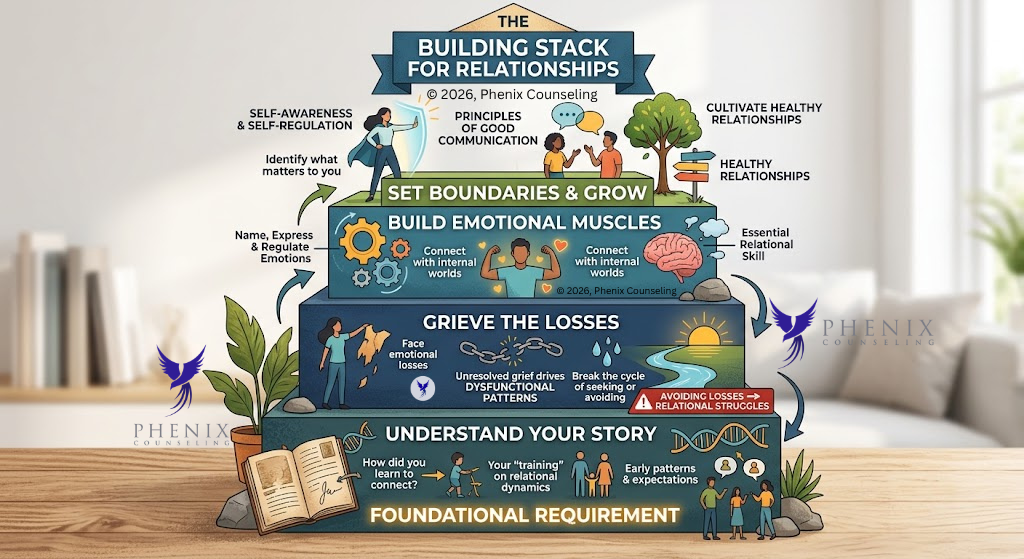
  1. Above all else, tend to your own story.  The greatest thing you can do to improve your parenting is to understand, process and grieve your own stuff.  How we react, and how we try to teach our children is a direct result of our upbringing.  We either seek to do the opposite of what we experienced (and opposite does not equal better), we fall into the unhealthy defaults of our family of origin, or we try to replicate what we had in a world that no longer supports it.  Investing in the process of understanding the ways in which we were shaped by our family of origin, grieving the ways in which that process missed the mark, and then learning how to manage our reactions rooted in that story is the single most effective strategy for improving your ability to shepherd your child’s heart into adulthood.
  2. Put your oxygen mask on first.  Your children will not benefit if they have all the materials, the lifestyle and the activities but not their parents’ whole and healthy selves.  Prioritize your mental, social, physical and spiritual health in your schedule.  Literally, sit down and block out the time to handle these priorities.  What is left goes to everything and everyone else.  Does that mean maybe less extra curricular activities or less possessions for your kids?  Yes (for most households), but this less is more because what your children gain is so much more valuable: self regulated parents who are able to attune to their thoughts and feelings, respond to their emotional needs, engage them as little people, hold space for their difficult emotions and repair the relationship when they make mistakes (as all parents do).
  3. Focus on the outcome.  The ultimate goal in parenting is for your kids to be seen and valued by you and to know that you are committed to their highest good, even if you have to make them unhappy.  Everything else – character, values, skills…flows from that foundation.  Your relationship with them matters more than their accomplishments or obedience.  Not a, “my kids like me and think I’m great” kind of relationship.  Sure…we’ll have those days which are really nice.  No.  I mean a deeper relationship, rooted in stability and security.  One that values the dignity and worth of each person, takes joy in the other and recognizes the responsibility the parent has to make wise decisions, even if they are not popular.

These three principles transcend any parenting fad.  They provide anchors in the stormy seas that keep us from drifting off with every wave.  In the midst of whatever parenting situation you face today you can slow down to ask:

  • What is being triggered for me in this situation?
  • How can I take a pause to self regulate, eat, connect with someone who can help my perspective or get some rest before I make a decision?
  • What can I say or do in this moment to ensure my child feels heard, seen and valued?

These questions may seem simple in the face of complex issues but I absolutely promise they will take you in the right direction.  Read the books, listen to the podcasts, peruse the trends of the day but when you keep returning to these principles and these questions, you will find your way.


Work-Life Harmony


Frustrated that you can’t seem to balance work demands with your personal life?

Wondering how your job affects your mental health?

Before we get into the details of our personal work-life relationships, let’s look at the bigger picture.  Every society has a philosophy about human rights and work.  The continuum stretches from having to earn every scrap of dignity and provision, all the way to a focus on each person contributing to the greater good with dignity assumed and provision a byproduct of impact on the community.  Where does your society fall on this continuum?

At its core – work is always about economics, whether scrapping to pay basic bills, or managing/preserving great wealth.  It is impossible to talk about work without awareness of economic systems. Capitalism demands continuous expansion in order to operate so every person must contribute through both productivity and consumerism, making rest a liability.  The machine has to be fed 24/7.  This is our context if we live in the US, which significantly shapes our career experience.

That larger context can trickle down into our family of origin, creating more specific messaging like, “you are only as worthwhile as your ability to meet everyone’s needs”; “if you don’t behave the way we need you to, we can treat you any way we like”; “you better earn your keep around here, nobody gets a free ride”; “if you are struggling, you must have done something wrong so you don’t deserve help”; “only weak people need help”; or “you better look out only for yourself”, to name a few…

So how does work interact with our personal lives?

Body

When we purchase a new electronic item, the first thing we have to do is ensure that it is charged before we can use it or we must plug it in to a power source.  This simple dynamic is a perfect example of how our bodies function: we need fuel (rest and food) before we can function.  Yet…we don’t act like that is true.  How many of us work first and rest later?  How many of us produce first and take in fuel later?  We act as if we have to earn rest and food instead of recognizing that we cannot produce without first fueling up.  Sound familiar?  There’s the context I mentioned – it’s the water we’re swimming in.

Putting the cart before the horse – demanding production before fuel – places enormous stress on the body and where does that lead?  Heart problems, digestive issues, weakened immune system and a host of other physical ailments.

Pause: Reflect on your physical health.  Have you been experiencing headaches, muscle tension, fatigue, sleep problems, chronic pain or any of the other consequences of stress?  If so, could your work be a source of the problem?  Your focus is simply on awareness at this stage.

Soul

When I ask clients about their relationship with work, I often get a baffled look.  Relationship?  What do you mean?  I’m referring to the way in which we relate to our work.  How do we feel about it?  What purpose does it serve in our lives?  Is it a life giving part of our world or is it soul draining?  These dynamics and more, comprise the relationship we have with our job and life experiences largely dictate this relationship.  Have you experienced poverty?  That can either drive over commitment to work or can wire the brain into a ‘poverty mindset’ that expects a low-paying existence.  Did your primary caregivers show you that relying on others was not a good idea?  Work can become the tool we use to ensure our independence, keeping us too busy for the entanglement of relationships.  If love in our family of origin was only offered when there was achievement and productivity…well, we carry this mindset into our careers – making ‘success’ our holy grail.  On the other hand, exposure to work as contributing to society, carried out with healthy boundaries and functional teams can set expectations for a fulfilling career that does not harm every other area of our life.

Another important dynamic is being the member of a marginalized group in our society.  This presents relentless challenges in the workplace from microaggressions to outright discrimination.  Being perceived as less than most days, takes a tremendous toll on one’s mental health and having to work twice as hard to disprove negative assumptions erodes not only emotional health but physical health as well.  Add in the gaslighting of those who would try to say that these challenges do not exist – and you have a recipe for breakdown.  The few who rise above these challenges are held up as the standard rather than the exception, and used as an excuse to ignore the very real obstacles that the rest face.

Most of us spend at least thirty six percent of our waking hours working!  There is no way that work does not affect our thoughts, feelings and behaviors across the board.  The fact is that our relationship with work, when unhealthy, can lead to anxiety, depression, mood swings, irritability, difficulty concentrating, impaired cognitive functioning, and substance abuse.  Yes, our soul health is set up by our childhood years but work is a major proving ground for those foundational dynamics.  Our work makes or breaks generational trends.  

Pause: Reflect on your soul health.  Does work intrude on your relationships?  Do you feel guilty when you’re not working?  Do you rarely have time for fun outside of work?  Are you realizing a lot of your stress and anxiety is work-related?  Take note of what you are seeing here.

Spirit

In faith communities, there is often conversation around one’s calling – the thing we were created to do.  Ideally, choosing our work within the context of relationship to a Higher Power should lead to a career that honors our natural giftings and offers a sense of purpose and fulfillment.  That relational foundation also becomes another source of fuel for the work we do.

There are two major threats to this ideal: 1) the reality of economic systems which care little for purpose or fulfillment and 2) the entangling of calling with worth.  There is a special kind of misery for those who have a clear sense of calling but who find themselves in an unrelated job due to economic pressure.  That discrepancy gnaws at the soul.  Calls to simply “have faith” and take the leap toward what we are meant to do are easily lobbed from the sidelines…from those who will not bear the economic consequence.  Even if we are working in our calling, our job can easily become the thing that pays our bills more than a faith offering.  Then there is the trap of earning favor with our Higher Power through working “as unto the Lord”.  Rather than the gift we were built to give the world, work becomes the way we prove our devotion

A few years ago, I harbored a lot of concerns about our business and its economic viability.  We had chosen to operate in ways contrary to the usual business practices in our field, based on directives we believed came from God.  We had a calling to build a practice of integrity, freedom and depth which does not align with the financial realities of healthcare in the US.  As I engaged ongoing conversation with God about this, I distinctly heard this truth: “Your provision does not come from the work you do.  Your provision comes from Me (God).  You don’t work to pay your bills.  You work to build my kingdom as I direct you.”  While I would have always said God was my provider, I promise you, that is not how I approached my work.  If I am honest about what I subconsciously believed, paying my bills was entirely up to me and the work I was willing to put in.  Clearly, this means I applied the same idea to my husband as we are in this together.  God helps those who help themselves…amiright? (insert eye roll here)   That word from God was a lightning bolt!  It aligned with what I would have claimed to believe but I had never considered such a plain and clear summary and I certainly had not been thinking or acting out of that truth.

Pause: If you ascribe to a particular spirituality, what is its view of work?  Have you ever considered what you were created to contribute to the world?  Do you have a sense of purpose and fulfillment in your work? Do you believe your job aligns with your calling? What do you truly believe about the source of provision for your needs?

So where do we go from here?  I stopped using the word “balance” with this topic because that has come to represent an unrealistic pressure to give everything in life an even amount of attention.  That isn’t realistic.  The word I use instead is “harmony” which asks the questions: Is my work bringing more positive to my personal life than negative?  Is my personal life bringing more positive to my work life than negative?  This post has majored on awareness and it is my hope that you now have clarity about aspects of your career that you may never have considered.

Your next step is to use your awareness to make a plan.  Where are there gaps between what you see and the goal of work-life harmony?  Identify these discrepancies and then generate a list of ideas for addressing each one.  Brainstorm with others who are further along in their journey of harmonizing.  Remember to think short term and long term.  Some gaps cannot be closed in a year but that does not mean you should abandon the mission.  Keep a separate list of options – short term strategies that respect your current limitations and long term objectives that break out of current boxes and move you toward the ideal.  You can then back up from those long term goals to identify small steps you will take now to start moving in the right direction.  We overestimate what we can do in the short term but we underestimate what we can change over time!  Then it is time to take action – start taking those baby steps.  Don’t be afraid to ask for help and reach out to us if you want to unpack the childhood messages that drive your career.

We have a LinkedIn profile where we want to continue this conversation about work-life harmony.  What questions do you have?  What would you like to hear more about?  Comment below!

When it’s not over…

When a crisis/trauma/loss is ongoing, how do I grieve in the midst of it?

What emotional health tools can I access when the situation is not yet resolved?

We talk a lot about grief work here at Phenix.  We firmly believe that the work of grief is absolutely necessary to mental and emotional health and necessary to the business of moving forward in a healthy way.  That work (at least how we describe it) has a timing to it though.  As such, there are a couple of limitations that we have identified over the years:

  1. The first year after a major loss is a time of daily reckoning with the absence – facing every new “first time without…”  If you are attuning to your emotions in that process and finding space to share your stories and feelings – that is the work.  That is enough.  As you approach the first anniversary, some space opens up for you to be able to dive deeper into the processing and releasing that is grief work.
  2. When you are in the midst of an unfolding loss, even more is there a lack of emotional energy to grieve!  How can you capture the nuances and details of the way loss impacts you when the story is still being written?  How can you bring closure to your feelings of anger, hurt, fear, etc. when they are still being produced fresh and new each day?

As I have worked with many clients this year who are finding themselves in unprecedented times…times of deep disappointment, fear, outrage and confusion, the topic of grieving would come up.  However, when each morning brings with it a new threat, a new loss – the principles of grieving felt out of tune and that limitation of grief work became glaringly obvious.  I found myself bringing up the concept of lament as a much more appropriate practice in such a situation.

Not only am I intimately familiar with the concept of lament from scripture but I was inspired to return to a talk from Dr M Elizabeth Lewis Hall on the topic of lament to glean specific applications to these times.

First – what is lament?  How is it different to grieving?  From my perspective, I see a lot of overlap in these two terms.  They are both associated with times of loss and/or wounding.  They both may look similar from the outside but they differ in intent and outcome.  The intent of grief is to move forward in life after a loss or wound.  It’s process is one of accepting a new reality, working through the pain of the loss, adjusting to a new environment and embarking on a new post-loss life (Worden, 2008).  You can find a deeper dive on grief hereLament’s intent is to find ways to cope with suffering.  It’s process is one of identifying a value, concept or Deity to turn to, presenting complaint, making a request and finding confidence that there will be a response.  Lament helps us reconnect with (or find), meaning, trust and a focus outside ourselves.  Doesn’t that sound relevant to these days?

So how do we practice lament? 

It begins with identifying a Higher Power – some value, concept or Deity that you believe has influence and/or control over life.  When life does not make sense, when suffering seems needless and unnecessary, the human soul cries out for explanation – someone or something to hold responsible.  Some have decided that is not an option for them.  They must rely on self regulation skills, community or physical practices/substances to help them move through seasons of suffering.  For those who are willing to look outside themselves and fellow humans, the journey begins – to identify some force to whom one can appeal, in addition to those other resources.  For us, it is a Triune God – Father, Son and Holy Spirit who I refer to as They in light of that Trinity structure.  For others, it may be Love as a Divine force, for example.

Once you have a Higher Power identified, a relationship with that entity has to be cultivated.  Under normal circumstance, do we feel comfortable turning to an absolute stranger to pour our hearts out?  Even when seeing a therapist, it usually takes several sessions to build enough rapport to open up in an ongoing way.  Similarly, if lament is to be useful, a relationship must be established and that takes time.  It is counter-intuitive but the crazier life gets, the more important it is to set aside time for this connection.  Think about the ways in which you get to know a new friend.  What are the ingredients of that budding connection?  Likely – conversation, doing fun things together and hanging out with mutual friends.  Use these same principles in relating to your Higher Power.  Justin and I have learned to use our imagination to set the scene for conversations with God.  We specifically invite God to make Their presence known to us before we begin an activity.  We hang out with others who also have a relationship with God, praying together and sharing our God-experiences with each other.  Get creative and find ways to translate these ideas into connecting with your Higher Power.

In times of suffering, if this relationship and time together has been established, the rest flows more easily.   We can bring our uncensored complaints to God.  If you come from the Christian tradition, this may have been frowned upon in your circles but scripture absolutely refutes such prohibition.  Not only is there a whole book of the bible called Lamentations, there is an entire category of Psalms referred to as Psalms of lament, not to mention the plethora of lament examples scattered throughout the Bible.  Toxic positivity tells us that we should not complain.  We should put a positive spin on every trial but psychology (not to mention scripture) does not support this approach!  Think about a time when someone was able to help you see a difficult circumstance from a better angle…Did they steamroll over your emotions of distress to shove you in that direction or did they take the time to first listen, validate and empathize with where you were coming from?  We struggle to change our thinking before we first feel heard and understood.  Honesty and transparency is essential to trust, connection and support so present your complaint with your whole chest!  Then, take some time to simply listen for a response of empathy.  Perhaps it comes in words – thoughts that come to mind, or a comforting smell, a soothing melody, the sensation of a warm hug, or some other sign…

Next, we make our requests.  Again, honesty and authenticity is key.  Talk about what you want to see happen, even if your desires seem dark or frivolous.  You have to let the vinegar pour out before the oil will come, so keep talking.  I realized years ago that I had learned to be deeply suspicious of my desires.  This book helped me uncover subtle spiritual messages about discounting and denying what I truly wanted instead of bringing it to God and recognizing They wired me in specific ways with specific desires They wanted to fulfill.  That’s a conversation for another post; suffice it to say that letting your Higher Power know what it is you want and need is key to unburdening your soul.  This is the place where you release the weight of your suffering into the hands of Another and yes, I suggest you speak out loud.  Psychology tells us the power of simply telling our story and speaking our truth.  I believe there is also a spiritual power in this practice that is a mystery I cannot explain, yet very real.

Lament always ends with surrender which is rooted in a confidence in the Higher Power.  Though things do not make sense, though your complaints and requests are valid, yet will you trust the wisdom and power of that Higher Power who sees and knows much more that you do (hence the title, “Higher Power”).  This is where the importance of cultivating a relationship comes into play.  How do we trust something that we do not have a connection to?  How do we trust someone we do not know?  In this phase of lament, we return to stories.  Stories from our own life history and that of other sojourners which testify to the faithfulness and presence of our Higher Power.  It is in rehearsing these stories that confidence grows.  If companionship and fidelity has been proven before, then it can be counted on again.  “Surrender” has become a controversial word so let me define it more specifically here.  Surrender, as an outcome of lament is the decision to trust the evidence in the stories.  Trust that I am not alone in this.  I am held and supported in my suffering by a Power greater than myself and that Power has my best in mind.  It is choosing to rest in that belief.  It is not leaving one’s brain at the door, so to speak, and blindly aligning with concepts for which there is no evidence (i.e. lived experience/stories of presence and faithfulness).  It is also not resignation.  I remember the moment when I realized I was confusing those two.  God gently confronted me with the fact that throwing my hands up in futility with a decree of, “it is what it is” was absolutely NOT surrender.  Ouch.  Ever since, I have had to pay close attention to that difference because one leads to peace, the other leads to despair.

There you have the practice of lament which I believe is an important tool in such a time as this.  If you are familiar with African American  spirituals, you may recognize this cycle of address, complaint, request and trust.  It is a cycle we return to as many times as needed while our trials unfold.

But what about grief?  Sometimes there is an anticipated end which begins to bring up the need for processing.  Sometimes, our suffering has no end in sight or it is way off in the distance.  Either way, it can be helpful to document the losses within the loss that are unfolding – just a brief, bullet-point listing of what is going away or what is missing.  This allows your brain to download this baggage and when the season comes to an end, that inventory becomes a launching pad for the grief work that transitions you to your next season.

What are your thoughts on lament?  How are you using these steps in your own seasons of pain or suffering?


Gen X Power Surge

Power surge – that’s my fancy name for hot flashes…

via GIPHY

In all seriousness though, what I love about my Gen X group is our absolute refusal to take this life transition lying down.  Previous generations suffered in silence, rarely discussing it with peers and certainly not with the generation behind.  What we are finding however is a medical system completely unequipped to address our demand for answers.  For goodness sake, prior to 1993, women were rarely included in clinical trials!  That means we know very little about the unique responses to medications and surgical procedures that women have versus men.  In January of 2024, it was reported that less than 2% of medical research funding globally is spent on the female reproductive system.  The picture is even more grim for women of color who face unique geographical as well as systemic oppression health consequences.

Thankfully, things are slowly changing and there are resources popping up to help us understand what is happening and how best to move through it.  Unfortunately, some see an opportunity to make a fast buck so there are a lot of “snake oil” options to be found.  Finding a doctor who humbly acknowledges the severe deficits in women’s health and is committed to listen and learn is vital for assessing our options and choosing wisely.

But perimenopause/menopause is not just a physical experience.  While I have found much content on the physical aspects of this season, I have not seen a ton on the mental and emotional ‘adventure’ of it.  When that is mentioned, experiences are often chalked up to hormonal causes.  I find this quite minimizing and inadequate.  While hormonal changes absolutely impact our emotions and concentration, there are a multitude of developmental changes that have a more relevant effect on what is happening for us emotionally and mentally.

By the time perimenopause begins (around age 47 on average), we have often reached a much more stable understanding of who we are, what we want, what we will tolerate and what we will not.  There is a shift happening toward setting boundaries, speaking up for ourselves and caring less what the world at large thinks of us.  This is also the season when the discrepancy between who we now understand ourselves to be and the life we actually built become glaringly obvious.  Is it any wonder that irritability, depression and anxiety might manifest?  All of this awareness with no place to go is a recipe for trouble all by itself.  Add in hormonal changes, and you can see where the ‘fireworks’ come from!

Something else I don’t see talked about much is the wrestling match we engage in with the illusion of control.  We live in a society (here in the US at least) where health is one’s personal responsibility.  There is little acknowledgment of what we call the “social determinants of health” which actually have 64% of the impact on our health.  Perimenopause really brings that reality to the forefront but everything around us is still saying it’s up to us as individuals to conquer the symptoms we are experiencing.  With this kind of gaslighting, does it make sense that depression and anxiety might show up?

Also largely missing from the conversation is the actual developmental growth we can lean into: greater body appreciation and even liberation, as well as improving self regulation, boundary setting, and time management skills.  This is a wonderful season for self awareness and examination.  There is also an opportunity to take our spiritual development to the next level – one of integration and comfort with mystery.

Finally, a vitally important piece to the perimenopause puzzle is the need for grief work.  Perimenopause by definition is a transition to a different state of being.  While there are gifts on the other side to be discovered (see developmental growth above), there are also significant things we are letting go of, and that must be honored.  To move forward unhindered, we must surrender what is passing away (versus desperately clinging) and purge what no longer serves us.  That is the point of grief work.  It allows us to get on with mastering this new season and awakening the gifts of post-menopause.

To continue this conversation, check out my video series on YouTube.  Leave a comment here or on our videos with your questions or experience.  What have you found missing from the perimenopause dialogue?


Our health privacy

What does corporate use of consumer data have to do with therapy?  

How do I make sense of how my personal data is being bought and sold in the world wide web marketplace?  

What does all that have to do with counseling?  

Phenix is about holistic health – working with you to address mental and emotional health while connecting that journey to your body and spirit.  Every now and then, a “random” issue comes along that intersects with our work.  For example, we posted last week on the approaching hurricane, not because we are weather experts but because we see the mental and emotional health dynamics associated with storms.  Today’s post on data privacy may seem outside the scope of mental health content but hang with us…it does intersect and it does matter.    

Our clients are aware that we use an electronic health record (EHR) platform called Simple Practice.  Not only are health care providers strongly encouraged to use an EHR (required if they accept Medicare/Medicaid funds), but as a telehealth practice, an EHR is a basic necessity.  One of the principles we have adhered to since founding is to utilize tools and solutions which honor the privacy protections of the Health Insurance Portability and Accountability Act (HIPAA).  That said, HIPAA standards represent the minimum level of care.  As therapists, we operate at a much higher ethical standard based on our role as stewards of our client’s information.  Our clients trust us to protect their vulnerability as much as possible and we take that responsibility seriously.  With those values, recent developments are causing concerns that we want to share with those who invest in their health through therapy (whether our client or not).  

On August 2nd, our EHR provider released a new terms of service document which aggressively required signature within two weeks to retain access to all of our client care information.  This was the first red flag to indicate that clearly, this company does not understand the legal access requirements for medical records.  Most of us pay little attention any more to the terms of service agreements that we all “click the box” for nearly every day.  We’ve all probably joked about possibly signing over our first born without knowing it…The thing is, terms of service are fairly standard for general tech companies but healthcare companies must operate very differently.  Some clinicians were tipped off by the inappropriate presentation and started reading the new terms of service.  Within days, a firestorm erupted with clinicians raising concerns in multiple online communities.  The new terms claimed rights to user data which did not sensibly align with what should be needed just to provide the service we are paying for, and clinicians weren’t having it!  This resulted in the company backpedaling slightly…extending the deadline for agreement and entering into the compliance review process they should have completed before setting up the terms.  The easy answer would seem to be – just find a new provider.  Unfortunately, the problem is bigger than this one company…     

In the past decade, a quiet war has been unfolding in technology. Capitalists long ago discovered the profit in monetizing data.  Most of the technology tools we use today are based on this practice of offering a ‘free’ service, (social media, email, web search, cloud storage, etc.) in exchange for access to data that can be aggregated and sold to the highest bidder.  This purchased data allows businesses to target us with advertising and offers, personalized to what we are searching for/interested in.  Investors have found more and more spaces and creative ways to entice us to hand over data they can monetize.  About ten years ago, venture capitalists discovered the health care industry as an unmonetized space and started moving in.  Technology companies started offering online therapy way before COVID made it popular knowing that it allowed them to set up systems which could collect valuable data.  These companies were launched and run by investors with zero healthcare experience.  The problem is, monetizing healthcare data is illegal, resulting in over 7 million dollars in fines against one of them, for example.  For a company raking in over a billion dollars annually (2022) though, that fine is simply the price of doing business.  So the quiet war behind the scenes wages as tech experts launch healthcare companies daily with nary a clinician in their leadership hierarchy, leaving them out of touch with the ethical rules clinicians must follow.  Therapists and medical providers have been sounding the alarm for years but the millions of dollars these companies have available to control the narrative and pay the fines is almost impossible to beat.  What that means is that it is extremely difficult to find the technology tools we need, set up with full understanding of healthcare ethics and even healthcare law.       

Trust and transparency is the foundation of the therapeutic alliance.  What our service providers do with our client data (even when it is ‘deidentified’) matters to us.  We see our role of stewarding client data as a sacred trust.  While it may seem hopeless to expect today’s environment of corporate greed to prioritize privacy over profit, we have a responsibility to keep fighting.  What that looks like for us is participation in the collective pushback on our EHR provider to: practice the Safe Harbor Method in deidentifying data, legally commit to respecting the intellectual property rights of clinicians who customize EHR features, as well as to disclose the client portal access terms of service, how data is used for AI training, and what exact information is being sold to exactly what companies.  Electronic Health Record software is not a free service.  As a small practice, we pay over two thousand dollars a year, so imagine what more than 170,000 clinicians are paying (estimate of customer base for our current company)!  Selling user data is not a necessary component of their profit strategy.          

Additionally, we are taking the time to explore the alternatives.  This is labor intensive and exhausting but necessary.  We will look for tech companies run by clinicians, and who provide the ethical parameters our clients deserve.  We have been strategic from the start in how we structured our processes.  Our EHR happens to be a comprehensive practice management platform as well, capable of handling every technological need but we have never used it in that way.  We use separate platforms for payment, messaging, video-meeting, etc. for two reasons: 1) We are not at the mercy of one platform if it shuts down for some reason, containing every tool we need to serve our clients and 2) Our client’s information can never be accessed in one complete package.  While the companies who serve the healthcare industry have the greatest access to tech tools of confidentiality, perfection does not exist in this world and so we have structured things accordingly even before this latest concern.  Moving forward, we will keep you updated every step of the way so that you have clarity about how your records are stored, accessed and managed.