Storm Sanity

Storm Sanity

I live in Orlando and so I am sitting here looking at reports showing Irma’s path headed directly toward us.  As I scan my social media news-feeds and talk to loved ones, it is clear that anxiety is high and coping skills are a must if we don’t want to end up losing a lot of sanity ground by the time this is all over.  I thought it would be helpful to explore ways to maintain our mental/emotional health through this storm.

As soon as you figure out where you will spend the storm – in place, at a shelter, with friends or completely out of town – make a plan for maintaining good sleep, nutrition and movement.  These are the first things to go in circumstances like these…we eat food that leaves us feeling terrible, barely move and sleep either too much or too little.  It just happens because we get caught up in the urgency of the moments and/or the confusion of the aftermath.  Make sure you have food options on hand that make your body feel good, figure out a reasonable sleep schedule you can stick to throughout your stay and brainstorm ways to get some movement in every day – whether it’s using the (non-electric) equipment you have in place, simple callisthenic movements like jumping jacks or adventure walks outside once the storm clears.  Get on Pinterest now while you can to find movement ideas that will work with the circumstances you’re in.

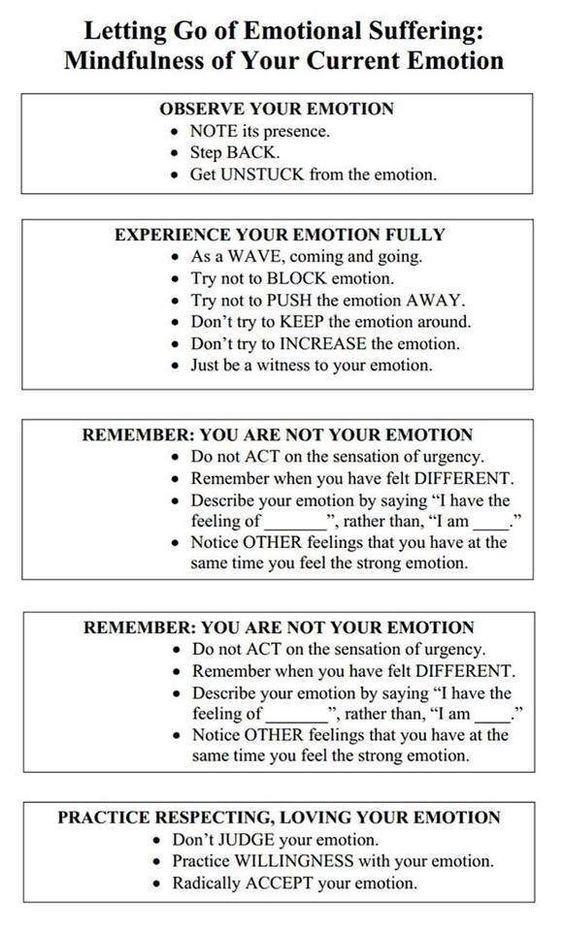
Make sure you have resources and materials in place to manage your emotions.  How do you think you will feel during this experience?  What are the things you normally need when you feel like that?  (Art supplies, journals, stress balls, stuffed animals, pets, etc.?) How can you adjust those strategies to your lock-down situation?  When you are stressed, upset or overwhelmed, you will not have the mental resources to figure these things out.  Do it now so you have a plan to express and manage your emotions.  Here’s a worksheet you may find helpful:

emotion management

This is not the time to play lone ranger.  Reach out.  Arrange to be with others throughout this experience if at all possible.  Don’t assume that family is your only option if you know they drive you crazy on a regular day.  Can you imagine being locked up with them for days in a stressful situation?  Think about your social circle…Who are the healthiest people in your life?  Gravitate to them first.  Yes, take some time each day to be alone…to breathe and to think but make sure you stay connected to share your thoughts and feelings with others.

Finally, pay attention to what you expose your mind to.  Limit time on social media if it is filled with folks in a frenzy.  Watch the news/weather channel only long enough to hear time estimates of the storm’s approach.  Do internet searches for any specific information you may need for your preparation efforts – rather than watching TV endlessly, waiting to learn “everything”.  Avoid conversations with those who will only increase your stress and anxiety about this storm.  Decide now what reasonable truths you need to focus on.  Find resources that will align with those truths – write them down if you have to….whatever you have to do to ensure that what is coming at you repeatedly will be functional, encouraging and helpful!


I’ve never been in therapy…

We often get our view of reality from television but it only takes one hospital visit to learn that real life is not like Grey’s Anatomy.  Likewise, if you’ve never been to therapy, it’s a dangerous plan to assume it might be what you’ve seen portrayed on TV or in movies.  So, what can you expect? First of all, you don’t need a mental health disorder to come to therapy.  In actuality, most people seek counseling for a host of regular life problems: relationship struggles, major life transitions, parenting challenges, etc.  Yes, there will be questions to determine the severity of the issues you are facing but your therapist does not see you as “sick” or “crazy”.  A good therapist regularly sees her or his own counselor, for that matter.

Choosing the right therapist has two components: First – finding someone with the appropriate knowledge and skill for your particular concerns.  Second – finding someone with whom you have a personal chemistry.  That second component is tricky as it is difficult to predict who you will “click” with but this is such an important requirement.  It is possible to sit with a perfectly competent therapist but not make significant progress in your work due to a lack of connection between you and the therapist.  This is why Phenix offers a free initial consult to all new clients.  Hopefully, you have a network of friends and/or family to whom you can turn for referrals.  They know you best and can likely predict who might be a good fit for you.  Check the recommended providers’ websites to see what they specialize in. Finally, give your prospects a call to discuss what you are interested in addressing so that you can get a sense of how well you might connect to this person.  A few questions you could ask are:

  • What experience do you have working with this issue?
  • How do you typically approach helping clients with this issue?
  • What resources do you most often recommend to your clients?
  • How has your own personal therapy informed the work you do with clients?

Your first several sessions are usually quite different from subsequent sessions here at Phenix:

  • Our free consult gives you the opportunity to ask the questions needed to determine if you have chosen the right person to work with.  We also will complete basic mental health screenings to ensure that tele-therapy is the right level of care for you.  We intentionally utilize only a one-page information form prior to the appointment because we understand that we cannot expect full disclosure from someone we have not met and we have not yet established a therapeutic relationship.
  • If you choose to initiate therapy after the free consult, you will receive full disclosure documents electronically so that you can see the details of our therapeutic relationship but you do not have to sign it until after your first appointment where you can clarify anything that does not make sense to you. During this first therapy appointment, we discuss your goals and the potential ways in which we would be helpful to you, finalizing a tentative plan for moving forward if that is agreeable to you.
  • Intake documents are shared electronically after the first therapy appointment for you to complete.  By this time, you have met with your therapist twice and can feel a little more comfortable sharing detailed information.  The second therapy appointment is what we call an “intake” during which we ask a number of questions designed to obtain the details of your concerns as well as the context in which these concerns occur: social, physical, emotional and mental history as well as current status.  If you wish to include your spiritual journey – that is discussed as well.  This gives your therapist a window into your complex world.
  • At the third appointment, your therapist will generally offer a summary of all that has been shared as well as their understanding of the presenting concerns and it’s underlying components.  Often, your therapist connects dots, pointing out dynamics that may have gone unnoticed.  This is a collaborative process in which you participate to shape an overall narrative that then drives the action plan to be created.  You and your therapist establish goals and agree upon interventions for pursuing them.

From that point forward, appointments typically involve: discussions of progress, exploration of emerging insight, expressive activities (non verbal interventions such as art), skill learning and relational check-ins (monitoring your relationship with your therapist).  A sacred space is created where you can be fully who you are, saying/expressing exactly what you need to say with privacy and no judgment.  Your therapist guides these interactions according to the goals you established at the beginning, though those goals may be adjusted along the way.  Each time we meet, you create action plans for applying what happens in therapy to your daily life.  It is these experiments in your world that become a main topic of our meetings – determining what is working, what is not and why.  Clients always have control over what they wish to discuss though your therapist will challenge the areas you tend to avoid as they are often most relevant.  Even so, you are always in the driver’s seat.

There is no standard length of time for therapy.  The number of sessions clients come in for varies wildly. Much depends on the complexity of their goals and the depth they are willing to go in transformation of self.  Some clients reach a satisfactory level of growth after a few months…some clients who wish to tackle long-term, traumatic issues attend therapy for years – albeit spaced out such as monthly appointments.  Again, you determine how far you want to go and for how long. Hopefully, this helps bring clarity to the therapy process.  We are much more likely to take a new path if we have some idea of what to expect!