Anti-Misery

Anti-Misery

How do you combat despair?

How do you keep worries in perspective?


I’m here to propose an answer to you. There is a power in remembering the good, no matter the situation we are in. 

Today’s topic and answer to combatting despair, living a life of anti-misery, is gratefulness.

What comes to your mind when you hear the word “grateful”? What does it mean to you?

For some, they think of being thankful, and with this being November 1st, they think of Thanksgiving.

Others think of being positive, which can easily translate to this pressure to be positive 24/7.

I’m going to propose a different definition: to be grateful is to remember. 

It’s not minimizing life’s struggles. It’s not minimizing the pain. It’s not ignoring the confusion or chaos around you. It’s choosing to remember the good. It’s remembering that the pain is not all there is. It’s knowing there is more.

Being grateful takes daily practice. The phrase “an attitude of gratitude” always used to frustrate me. Whenever I would hear it, it would usually be coming from someone who wanted me to only focus on the positive, not the real world situations around me. Plus, gratitude isn’t a feeling, or an attitude. It’s a daily practice and a choice. It also changes our perspective.

I have experienced some pretty tough things in my life. Healing from those moments has been a long journey. When I wake up in the morning, I have a choice. I can either choose to focus on the pain and ignore everything else. I can choose to ignore the pain and only focus on the positive (aka toxic positivity, not gratefulness) Or, I can choose to find and remember the things and people I am grateful for, while also acknowledging the very real pain that is there. This is how I have found joy, no matter my circumstances. 

For me, not allowing the trials or pain to overcome me is also about not being powerless. Being a survivor of sexual assault, I know the feeling of powerlessness all too well. It ties in real easily with feeling hopeless and helpless. However, part of my healing journey has been reclaiming my power. It has been realizing that I have a say over my future. That my past doesn’t get to define me. Most importantly, that the man who assaulted me does not get the chance to determine who I will become.

That meant I needed to change my mindset. I could not live in a state of powerlessness, hopelessness, or helplessness. Because I wasn’t powerless. I wasn’t hopeless. I wasn’t helpless. I had been in that moment of assault, yes, but that was not who I was.

Remembering what I have and who I have to be grateful for, allows me to see that there is still good in the world. It reminds me that I am loved and worthy of being loved. It reminds me that there is hope and light. It is a daily practice that reframes the challenges I am going through.

Gratitude is powerful. 

What are you grateful for today?


“It is not joy that makes us grateful,

it is gratitude that makes us joyful.”

Brother David Steindl-Rast

Pandemic Combustion Prevention


Illustrate combustion

Have you about reached your limits after almost 8 months of chaos? Most of us began this season in March with some level of anxiety but a commitment to be careful and a belief that “this too shall pass”. Well. It hasn’t quite gone that way, has it? Not only are we staring down the barrel of a resurgence as winter approaches (something the experts predicted back in April), but add in social unrest, election vitriol and a complete breakdown of societal support and structure across every level. While folks have developed a routine of one foot in front of the other to get through our days, even those of us privileged enough to still have a job with the freedom to work from home, are beginning to realize that our gas tanks are near empty. With no end in sight, what is the plan?

It is time to stop and be strategic. As much as we would love to believe in the magic of a new year, 1/1/2021 will not bring with it any major changes. We are looking at more of the same for many months to come. In the coming weeks, we are supposed to figure out how to celebrate holidays without putting ourselves or others at undue risk. Not to mention – find the energy to do so. As mental health professionals, we’ve been observing all of this and feeling compelled to bring reasonable strategies to the table along with specific action steps that we can focus on as we bring this year to a close.

Mentally
Treat your brain like your favorite recipe – the ingredients you put in determine the end product. 
What are your priorities in life? Is it a mission you are called to; a role that you value – leader, spouse, parent; a set of spiritual values?  What are the concepts bigger than you which should drive the way you do life?  Once you have clarity on priority – become a diligent curator of everything you consume!  The websites you visit, the people/accounts you follow on social media, the shows you watch, the books/articles you read, the videos you watch, the podcasts you listen to, the music you play…take a militant stance toward each and every ingredient being deposited in your brain.  Does each one align with the priority you identified?  If the ingredients don’t match up, the dish you end up with will not have any resemblance to what you claim to be of importance to you.  Remember quality matters as well.  Marinara made with grocery store tomatoes cannot compare to the sauce made with heirloom tomatoes from grandma’s backyard, right?

Action step: Spend a week making note of everything you take in, then sit down and make decisions about what needs to go and what ingredients are missing in light of what matters most to you.

Emotionally
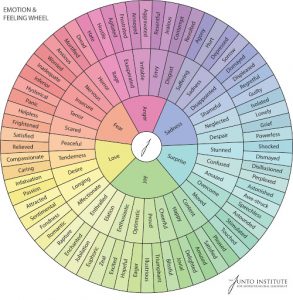
Protect space in your life to notice, identify and express your emotions.  If you struggle with knowing what emotions you are experiencing, try using this emotion wheel to give you the broader vocabulary which may help you get more specific about what you are feeling.

label emotions

Or…maybe words are not your issue, perhaps it is just not feeling connected to emotion at all.  Relying less on your brain to figure it out and more on listening to your body may help.  Just sitting quietly and scanning your body to find areas of tension, relaxation, pain, discomfort, unease or any other sensation can give you wonderful clues as to what is happening emotionally.  There are very good reasons why we lose connection to our own internal life and this is where therapy may be a great idea to build back that connection.

Action step: Experiment with a daily reminder on your phone for various times of the day: try morning, mealtimes, afternoons or bedtime.  When the alarm sounds, dedicate 10 minutes to tuning in to how you are feeling and express it in some way: draw something, find a song that matches, share it with someone or write it in a journal.  By the end of the year, you will know what techniques work and what time of day is best or you will have clarity on the fact that it is time to reach out for assistance.

Physical
Seek quality information and focus on the basics over which you have control.  Choose properly qualified sources for health information. (No, your meme-posting college friend who works in banking is not a good prospect). Look for people who are on the front lines of this pandemic – treating actual COVID patients or doing the research currently – and listen to their reports. COVID-19 was first reported on December 31, 2019 globally. Ten months is a very short period of time in the world of medicine. We have to expect the information to deepen and grow each week, so taking any kind of permanent stance on what works and doesn’t is not wise. Find good sources, listen to the information for yourself so that you can make wise decisions about your health and those with whom you come in contact.  If you have friends working in the microbiology, epidemiology or infectious disease fields, ask them for recommendations.  Here are a few resources to consider as well:

Medscape Resources

Simple model of what we currently understand regarding how the virus is transmitted. Note this is based on computer modeling and assumes a person in their most infectious stage of the virus.  The encouraging news is how effective simple strategies are against this worst-case scenario!

Laurel Bristow, Infectious Disease Researcher

Samantha Yammine, PhD – Neuroscientist/Science Communicator

Kennen Hutchison – PhD Student-Neuroinvasive Virology

Action step:  Find one or two good qualified sources for pandemic research information and do your best to minimize everything else so that you can protect yourself from panic and overwhelm.  Take a look at the basics in your life: gentle nutrition, sleep and joyful movement.  These are the things over which you have the most influence.  Determine the baby steps you can take to gain progress in those areas.

Social
Abandon ‘all or nothing’ approaches to social engagement. We need each other and so we need to be flexible in creating opportunities to connect.  We are called to physically distance – we do not have to socially distance.  It is time to let go of waiting on how it used to be.  Grieve the days that are in the rear view mirror.  The ways in which we interact – both in person and digitally are changed forever.  Change is constant.  We will have some elements of contact back someday AND we will have precautions that will stay with us indefinitely.  Many of us have refused to reckon with this reality, holding out for a return to “normal” while life passes us by in isolation.  Don’t skip the grief: the reckoning, the hurt, the fear, the anger, the sadness, the acceptance…it all must be attended to if we are to avoid the subconscious consequences.   Acceptance is hard won.  It looks like intentional strategies to regain what has been lost, from new sources.

Action step: Commit to the digital tools you may not enjoy as the price to be paid for relationship: video calls, phone calls, apps.  Feel the irritations, the frustrations, whatever difficult emotions you have and move forward anyway.  Put these digital connection appointments in your calendar so that they have a chance to slowly work their way into your normal routine.  Use the information you have gained from the science community to develop reasonable strategies for in-person gatherings.  Talk to your doctor about your unique vulnerabilities.  Discuss your decisions with friends and family and find the ones who are willing to commit to the steps required for minimizing risk to yourself and loved ones.  Make those folks members of your pandemic pod and enjoy your time together!

Would you benefit from a step-by-step walk through in applying these suggestions?  Click here to download our pacing manual!  We provide the questions and worksheets to help you identify your priorities, evaluate your media consumption, manage your emotions, improve your sleep, design your pandemic pod and prioritize your relationships.  We also provide great resources for learning more about helpful phone apps, nutrition and exercise.

GET THE MANUAL HERE

Storm Sanity

I live in Orlando and so I am sitting here looking at reports showing Irma’s path headed directly toward us.  As I scan my social media news-feeds and talk to loved ones, it is clear that anxiety is high and coping skills are a must if we don’t want to end up losing a lot of sanity ground by the time this is all over.  I thought it would be helpful to explore ways to maintain our mental/emotional health through this storm.

As soon as you figure out where you will spend the storm – in place, at a shelter, with friends or completely out of town – make a plan for maintaining good sleep, nutrition and movement.  These are the first things to go in circumstances like these…we eat food that leaves us feeling terrible, barely move and sleep either too much or too little.  It just happens because we get caught up in the urgency of the moments and/or the confusion of the aftermath.  Make sure you have food options on hand that make your body feel good, figure out a reasonable sleep schedule you can stick to throughout your stay and brainstorm ways to get some movement in every day – whether it’s using the (non-electric) equipment you have in place, simple callisthenic movements like jumping jacks or adventure walks outside once the storm clears.  Get on Pinterest now while you can to find movement ideas that will work with the circumstances you’re in.

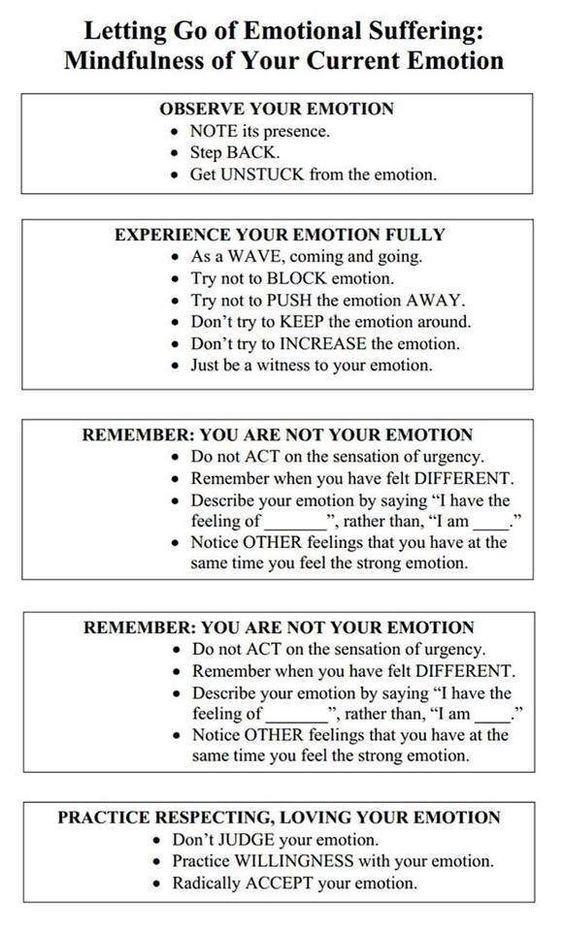
Make sure you have resources and materials in place to manage your emotions.  How do you think you will feel during this experience?  What are the things you normally need when you feel like that?  (Art supplies, journals, stress balls, stuffed animals, pets, etc.?) How can you adjust those strategies to your lock-down situation?  When you are stressed, upset or overwhelmed, you will not have the mental resources to figure these things out.  Do it now so you have a plan to express and manage your emotions.  Here’s a worksheet you may find helpful:

emotion management

This is not the time to play lone ranger.  Reach out.  Arrange to be with others throughout this experience if at all possible.  Don’t assume that family is your only option if you know they drive you crazy on a regular day.  Can you imagine being locked up with them for days in a stressful situation?  Think about your social circle…Who are the healthiest people in your life?  Gravitate to them first.  Yes, take some time each day to be alone…to breathe and to think but make sure you stay connected to share your thoughts and feelings with others.

Finally, pay attention to what you expose your mind to.  Limit time on social media if it is filled with folks in a frenzy.  Watch the news/weather channel only long enough to hear time estimates of the storm’s approach.  Do internet searches for any specific information you may need for your preparation efforts – rather than watching TV endlessly, waiting to learn “everything”.  Avoid conversations with those who will only increase your stress and anxiety about this storm.  Decide now what reasonable truths you need to focus on.  Find resources that will align with those truths – write them down if you have to….whatever you have to do to ensure that what is coming at you repeatedly will be functional, encouraging and helpful!


Loving someone with anxiety

“My loved one deals with anxiety – how can I be supportive?”  It’s a frequent question as anxiety tops the list of common mental health issues in the US.  When it comes to relationships, we want to love well, to actually be effective in our efforts to help but good intentions don’t always lead to good outcomes.  Thankfully, there are some proven strategies for loving well in this situation.

First, let’s look at the ineffective methods:

  • Telling your loved one to “just calm down” or “don’t worry about it”!  “Well now, I hadn’t thought of that” says your love one….”let me get right on that.”  Not!  Seriously?!  If it were that easy, this wouldn’t even be an issue.  Such statements minimize the very real experiences and emotions of our loved ones, inspiring guilt and shame that feeds the anxiety even more.
  • Over-spiritualizing the problem.  “If you’d just give this to God, you’d feel a lot better”.  Most faith traditions have scriptural encouragements about surrender and trusting one’s Higher Power.  Of course, these are relevant concepts in regards to our thought life and what we choose to mentally focus on.  However, anxiety has very real genetic and physiological roots that cannot be ignored.  Expecting an instruction of “just pray about it” to fix the problem entirely makes about as much sense as telling that to someone having a heart attack.  Prayer is ALWAYS important but for the love of all that is holy, the person having a heart attack also requires some additional actions to effectively address the issue!  Anxiety (and any other illness for that matter) is no different.
  • Guilt trips.  Detailing all that your loved one has ruined for you with their anxiety, in hopes they will be motivated to change is not effective.  Guilt and shame are horrible motivators.  They may power the vehicle for a few miles, but they never go the distance.
  • “Protecting” our loved one from their problems.  Anxiety is only ever conquered through facing our fears with the proper support.  Fixing things for our loved ones in order to protect them only feeds the anxiety by sending the message, “you can’t handle this – I’ll do it for you”.  There’s nothing wrong with helping but we have to ensure that we take on tasks that free up our loved one to focus on their personal work instead of enabling them to avoid their fears.
  • Assuming that what works for you will work for your loved one.  If you struggle with anxiety as well, it can be easy to push the strategies you’ve found effective.  It’s great to share your own experiences.  At least, it’s so comforting to know you’re not alone.  At best, maybe your suggestion will work.  But then…maybe it won’t and that’s OK.  Everyone is different so the answers vary for all.

So, what works?

  • Asking your loved one about their anxiety (when they are feeling OK) with genuine curiosity that seeks to truly understand.  The more you enter into your loved one’s story, the more you will intuitively love well because you have connected with their experiences and emotions.  Even if you struggle to make sense of it all, your efforts are never wasted.  If you stick with it, understanding builds and your inquiries demonstrate to your loved one that you care and are interested in their world.
  • Asking about what is helpful.  Not in general terms…be specific.  “When is it better for you to have some space?  When is it helpful to have someone by your side?  Should I just sit with you or are there words that are helpful? Does a hug help or would touch make it worse?” This is not a one-time interrogation.  It’s an ongoing conversation that again demonstrates your interest, helps your loved one explore their own needs and trains you in loving them well.
  • Modeling a healthy lifestyle that values sleep, good nutrition and exercise.  These are the number one “medicines” for anxiety (though prescriptions have their place too).  Avoid the temptation to give advice in these areas.  Instead, seek a healthy lifestyle yourself and invite them to join in specific aspects of it: cooking healthy meals, visiting restaurants with healthy menus, going for a walk at the local park, shutting down life at a reasonable hour, protecting the bedtime hour from over-stimulation, etc.
  • Giving your loved one a safe space to verbalize their fears and concerns without judgment or “fixing”.  It is so tempting to provide answers that we hope will change our loved one’s thinking but it simply does not work that way.  Instead, we listen, again with a genuine curiosity that seeks to understand how they arrived at their conclusions.  We ask questions that explore the evidence upon which their thoughts are based.  We ask questions that explore alternative perspectives but we ask our questions without agenda…without the intent to lead them to the conclusions we want them to have.  They must have the freedom to arrive at their own pace, and to wrestle with their thoughts.  It is then more likely that they will ask for your perspective and at that point (not before), you can offer it to a heart that is actually open to hearing it.
  • Praying for and with your loved one.  In your prayers, take their fears seriously, present them to God and ask for comfort, support and strength.  Use the same nonjudgmental approach before God as you do with your loved one.  If God is who we say He is, then He can handle business without our directions.
  • Finally, do your own work.  Monitor your motivations.  Do you find yourself wanting to fix or control “for their sake”?  That must be addressed and counseling could be the way to do that.  Pay attention to your boundaries – ensure you are not taking on so much that burnout is inevitable.  Again, you may need support in addressing that.  When all is said and done, live the change you want to see!

Living with chronic illness

It’s like having an uninvited house guest who contributes nothing, eats everything in the kitchen, occasionally damages the furniture and won’t leave despite all attempts to kick him out.  Eventually, resignation sets in and you begin trying to figure out how you’re going to work around this vermin over the long-term.

A chronic illness diagnosis (cancer, diabetes, arthritis, to name a few examples) changes everything and what makes it a special kind of challenge is the complexity of the effects.  Everything is connected to everything else and so it seems no matter how much time goes by, you continue to discover another area that is impacted by the diagnosis.  Let’s break down the major categories:

Obviously, there are physical changes which come with the diagnosis.  Those vary according to the specific illness.  The consistent theme however, is the idea of limitation.  Physically, your body just doesn’t perform in the way you are used to.  Changes may be immediate or insidiously appear over time.  Energy level is often greatly affected and thus motivation to accomplish what was normal for you in the past, wanes significantly.  All of this leads to some form of identity crisis as our culture has so trained us to associate identity/worth with production.  If I cannot function/produce at the level to which I am accustomed, what does that say about me?  What makes me worthwhile?

Mentally – most chronic illnesses do impact brain functioning.  At best, we may experience some mental ‘fogginess’.  At worst, there may be physiological changes to the brain that result in difficulties with long and/or short-term memory or even personality change.  Processing speed often declines and things like executive functioning may be challenged.  It is difficult to determine which of these changes result from the illness itself and which are side effects of long-term medications.

Emotionally – the self-worth battle is a significant issue.  As we lose major aspects of how we defined ourselves, we struggle to redefine and focus on what now makes us who we are.  If we have always struggled with self-care, the idea of prioritizing self and doing what it takes to pursue health is a foreign concept.  We may face spiritual crisis as we wrestle with the idea of a higher power that would  allow this to happen.  This current battle filters through the lens of all we have experienced.  The meanings we have made of our childhood then, determine how we integrate this latest development.  If those meanings are dysfunctional – managing a chronic illness becomes nearly impossible.  One of my areas of special interest is the reciprocal nature of this domain.  So many chronic illnesses have a correlation with unresolved emotional challenges.  It is becoming clear from medical research that emotional trauma increases the rates of chronic illness.  Thus, it makes sense that addressing emotional trauma would be a key component of preventing/treating chronic illness and that is one of my passions!

Socially – our loved ones struggle to adjust to the implications of our diagnosis.  As we sort out the lifestyle changes needed to care for our condition, the aforementioned limitations; as we deal with our own changing self concept, we relate to everyone differently.  If we are not aware of this, then we are not even able to help others figure out what is happening and thus, we collectively exist in a state of confusion and frustration.  In the end, everyone is experiencing their own grieving process of the way things used to be and the envisioned future that now will not manifest as planned.  Grieving is complicated (denial, bargaining, anger, depression, acceptance).  Imagine a system of individuals all working through that process at their own unique speeds in the context of their own functional and dysfunctional coping skills and core meanings.  Is it any wonder that it gets messy?!  Suffice it to say, relationships are absolutely impacted, yet very little attention is given to this area.

Unfortunately, most medical teams do not take the time to inform, much less address these complex issues.  Too many patients muddle through their diagnosis, unaware of the developmental impact and what are very normal implications.  Our default is to always seek status quo (remember learning about homeostasis in biology class?) and so the aftermath of a diagnosis often looks like a constant battle to return to our “normal” with increasing frustration at the inability to do so.  The scary part is that all of this then exacerbates our illness, making our physical condition worse and creating a vicious cycle of decline.

My hope is that this information helps someone realize that they are not the problem.  That the struggles they have been having are perfectly normal in the reality of a chronic illness and that there is hope!  Knowledge is power and once we understand what we are dealing with, we can create and execute a plan of attack.  Just as the doctor delivers information, prompts options in need of research, creates the physical treatment plan and monitors progress – so too can the counselor educate on the developmental impact of chronic illness, highlight areas for exploration, as well as create the emotional, mental and social treatment plan.  Carefully working on self-worth and relationships within the context of physical limitations is key.  Constantly monitoring self-care: sleep, nutrition and movement is a requirement.  Completing the tasks of grieving is necessary for transitioning into a new normal: taking inventory and accepting the reality of your losses, working through the pain of loss, adjusting to the new environment created by the current reality and integrating the old self with the new self.  The best part is that this work improves physical outcomes so despite the difficulty of the process, it is definitely worth it!

Fresh Starts

Some of us get excited about the new year.  We see it as a new chapter in our books: a blank page, a clean slate.  Others are so sick of the “new year, new you” grandiosity that emerges this time of year.  We cast cynical eyes at the bright-eyed hopefuls…mentally calculating how long it will take them to fall back to the bottom of the same pits they’ve lived in for years.  Social media is full of commentary on ‘new year resolutions’ – some encouraging, some disparaging and some offering a ‘third way’ perspective.  Where do you fall on the continuum?

Regardless of your stance, there is a reason that humanity so consistently gravitates toward new year rituals.  I believe we are naturally wired to operate seasonally.  A brief look at nature shows us this rhythm: each year there is soil preparation, planting, hope, watering, weeding, harvesting, barrenness and then new beginnings.  In the winter, the farmer assesses the previous year’s experience, using that information to plan out the next year’s crops.  Seeds are ordered and excitement begins to build toward the possibilities next summer.  Is it any coincidence that those same activities seem natural to us in the middle of winter (New Year’s Day)?  Seems to me that adopting a crotchety attitude toward all of this is rather fruitless (no pun intended 🙂 ).  Thus, we have a choice: do we jump on the bandwagon of renewal or do we sit it out with the assumption that nothing ever changes anyway?

I’m a counselor so I’m sure it’s no mystery where I fall.  My entire field is about transformation so any excuse to move toward that is something to be excited about in my world.  I believe the key is realism.  I think this is where the bandwagon falls apart – we spend December in a whirlwind of comparison.  The holidays ramp up the social media highlight reel, making it that much easier to look at our own lives through a distorted lens which inspires a long laundry list of all that is wrong.  We spend December mentally beating ourselves up and by the 31st, we have created a herculean plan for life overhaul which we enthusiastically proclaim and begin on the 1st.  Only to fall flat before the first month of the year is done 🙁 .  Yeah….let’s not do that again.

Again, realism is key.  It is now the third day of the year.  I’ll assume we’ve basically come down from the high of the first day and we may already be casting skeptical eyes at our resolutions.  Before you abandon ship, could we explore some adjustments?  I’d like to offer a few suggestions:

  • Resolutions are goals.  They are nice for painting the destination but they don’t necessarily give us any idea how to get there.  We need to define action steps.
  • If you made more than one resolution, may I suggest that you choose just one?  What is most important to you?  Focus is vital!
  • Reflect on 2016.  What happened in this area of your life?  What were the specific things that held you back in this area?  Make a list of those factors.
  • For each item on the list – what specific action will you need to take to conquer that obstacle?  What routines will you need to develop in order to reprogram the way you typically operate?  What rewards do you need to set up to reinforce these new behaviors?  Break things down into a list of small, specific steps.
  • Break our your calendar/planner (paper or electronic) and start mapping out those specific steps throughout the entire year.  Spread out the steps so that you are doing no more than one new thing each week.  Don’t take everything on at once!  Stagger out the steps over time so that you make changes gradually – giving yourself enough time to establish each new step before moving to the next one.
  • Ideally, it is best if you schedule the steps at a particular time/day but at the very least, record a reminder on a particular day of the week (or repeated every day of that week if needed).  Consider setting alarms on your phone to remind you of things you need to do.
  • While you’re at it – schedule a monthly check in now to assess how you’re doing: what’s working and what needs to change.
  • What resources can you turn to for maintaining hope throughout the year?  (Magazines, Facebook pages, blogs, devotionals, etc.)  Sign up for those now so it is automatic.
  • Who can you enlist as an accountability partner/encourager?  Talk to them now and agree on specific contact: weekly phone call/text/Facebook message?  Consider including that person in your monthly check ins to help you assess and stay on track.

Transformation is extremely difficult but it is definitely possible.  As we’ve discussed before in this space, it is nearly impossible to do alone though so if you find yourself struggling to stay the course, if you can’t find effective support – please consider counseling.  Good therapy is one of the best ways to pursue renewal so don’t flounder alone!

Shattered

One of the greatest joys I have in my work is the privilege of helping clients piece the parts of themselves back together after a lifetime of brokenness.  Sometimes we find ourselves limping through relationships, work situations or family responsibilities.  It is typically problems in these areas that bring people into counseling.  For far too many, it doesn’t take long to discover the roots of these troubles as multiple incidences of abuse, betrayal, and/or neglect in the crucial early years of life.  American culture is rooted in a “pull yourself up by your bootstraps” mentality.  Everywhere we turn, the general message is to put our heads down and push through whatever obstacles come our way, in order to achieve and succeed.  Add to that the fact that folks who come from hard places often spend at least early adulthood in survival mode.  They don’t have the luxury of examining their pain and learning from it – every day is about making sure there is food on the table, a roof over their heads and beating back the fear or depression that threatens to consume.  We tend to minimize our experiences – “it wasn’t that bad” – and we shy away from the word, “trauma”.  The reality is though that any life experience that presented a threat to life or health, which elicited significant fear or helplessness is a trauma.  If we are honest with ourselves, many of us have such an experience in our history…sometimes multiple.  The resources to obtain assistance for emotional needs are usually scarce in such a scenario.  Even for those with means, the general approach is to ignore the past and look ahead to the next job, relationship or location that will make all the difference.  Unfortunately, the body and mind remembers.  Early trauma sets into motion dysfunctional beliefs that carry through into adulthood.  It distorts view of self and as research is now discovering – it literally changes the way the brain develops.  The effects of significant childhood difficulties are multilayered and extend into every area of adult life – relationships, career, self concept, cognitive functioning, physical health, etc.  In order to live life to the fullest, these effects must be faced, grieved and overcome.  The problem is, this is a painful process that is almost impossible to complete alone.  Hence why so many folks live their entire lives never experiencing significant healing.

This doesn’t have to be our story.  Competent, compassionate counseling is one of the most effective ways to address this.  What does that look like?  It requires a counselor who understands the multilayered impact of trauma – how it affects every aspect of development: socially, emotionally, physically, cognitively and spiritually.  Wading into these waters with clients is difficult.  A counselor who has not learned to sit with their own pain, who has not thoroughly grieved their own traumas, will not be able to sustain themselves in this work.  They inevitably resort to techniques and interventions that promise a quick fix and allow them to stay distanced from your pain.  True healing requires an empathic, authentic connection which provides the comfort and safety needed to face the ugly.  This relationship is foundational.  From there, the process begins with creating safety: cataloging resources available to the client outside of counseling, identifying the warning signs of emotional overload, as well as teaching visualization and relaxation techniques that will be used throughout the work.  Unfortunately, this is a step that gets missed in some counseling encounters which go straight into unpacking traumatic experiences with no tools for the client to cope outside of sessions.  This is clearly a very dangerous approach which can inoculate clients against counseling forevermore.

Once the client has mastered the skills necessary to cope with what they are about to face, then we can begin to explore their story.  This can happen in a variety of ways: verbally, or through writing, art or other expressive methods.  Using a variety of modalities allows the client to access multiple aspects of their experience.  The therapist facilitates the safety needed to tell the story and helps the client connect the dots between their experience and resulting beliefs, behaviors, decisions, health symptoms, and attachment styles.  Losses are identified and grieving is encouraged and guided.  This alone brings a tremendous amount of emotional relief.  It also identifies core beliefs that have driven dysfunctional patterns.  With the insight gained, choices are made regarding what needs to change and thus begins improvement in relationships and thinking.  Throughout the process, physical health is monitored and addressed.  Trauma experiences, as well as trauma work has physiological consequences and so the therapist must be proactive in assessing this area and partnering with professionals who are competent in treating patients with traumatic histories.

It is likely obvious by now that this is a delicate, unpredictable process that cannot be rushed.  By the time we choose to seek this kind of counseling, we have typically been dealing with the effects of trauma for many, many years.  Addressing it completely then, will take some time.  Everyone’s coping skills level and emotional reservoir coming into the process is different and determines how long healing will take so there is no formula to be applied here.  If you find yourself struggling to manage your emotions, ‘zoning out’ a lot, dealing with chronic health issues, beating yourself up, or battling multiple relationship issues, there is likely a trauma connection.  Give us a call!

Toxic Sea

At lunch with a friend today, we discussed our various stressors and life issues.  She paused and remarked that there was something we had not considered.  She went on to explain that she had to believe the larger context of what is happening in society today was taking its toll on our mental and emotional health.  Immediately, I believed she was on to something!  As we unpacked this spontaneous idea, it was sobering to stop and consider this larger impact.  Every single day, we are surrounded by social media posts, newscasts, reality shows, and casual conversation that disparage, discourage and dishearten.  The level of anger, fear and trauma that exists in our society may not be new, but its far-reaching broadcast is unprecedented.  Never in the history of mankind have we had such immediate access to the lowest dregs of human experience.  This has become our norm and as the old saying goes – fish don’t know they are in water.  When we are constantly surrounded by this acid rain, it becomes invisible…impossible to notice.  What we don’t see is absorbed without ceremony.  We don’t fight what we don’t observe.  That is frightening to consider when I reflect on what we are regularly besieged by.

This concern led me to sit down and draw up a battle strategy and I want to share it in hopes that we can confront this problem together.  Perhaps it will inspire others to make their own fight list.  My overall approach is based on the concept of ‘detox’.  If we are surrounded by a toxic world, then we must regularly take steps to combat this toxicity with some sort of cleansing.  Each week, I have a fasting day where I drink only liquids and everything I ingest is organic.  I always feel so good at the end of the day so I have a tangible experience to motivate me in this mental and emotional strategy.  Here’s what I have so far:

  • Develop a daily practice of taking a few minutes to notice the water we’re swimming in.  As I mentioned, we don’t fight what we don’t observe so this acknowledgement is the first step.  Use mindfulness techniques to take note of what messages are coming at you from the people around you and the media you watch/listen to.
  • Sabbath – whether you follow a faith tradition or not, you’ve probably heard this word.  I have come to believe that in my own faith perspective, the purpose of Sabbath is to re-calibrate my brain to my priorities and remind me that I am not God.  With this in mind, it makes sense to me Sabbath for each of us would look different in terms of what we do and don’t do on such a day.  What we each need to reset our brains and regain perspective on what we’re responsible for and what we are not will vary.  The trick then is to know yourself well enough to determine those needs and what activities will meet them.  (The real battle is setting aside a 24 hour period to make this happen but therein lies the lesson that I am not God – the world will continue just fine without me if I get off the merry go round for a day!).
  • Be intentional about exposing ourselves to what is noble, lovely, admirable, excellent and praiseworthy.  On a regular basis.
  • Cultivate friendships with people who offer life-giving words and make the effort to spend time with them.  `
  • Consider a recurring fast from all negative input: television, radio, social media, etc.  It is important to replace those things with something fulfilling so make a plan before you start.

I think this is enough to start with.  I’d love to hear ideas from others.  Each of us have unique mental and emotional vulnerabilities.  What I need for a cleanse is different from what others may need so the more minds contribute to this conversation, the more likely we can generate a list that has a little something for everyone!